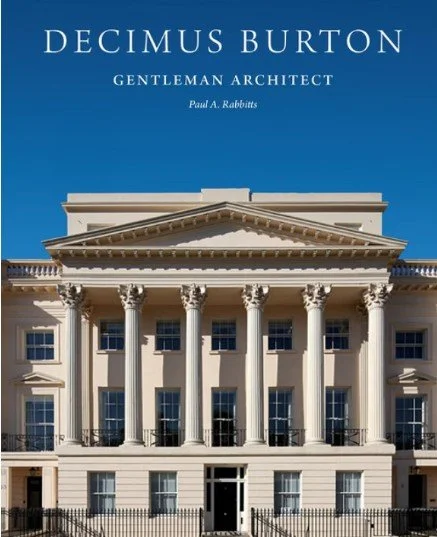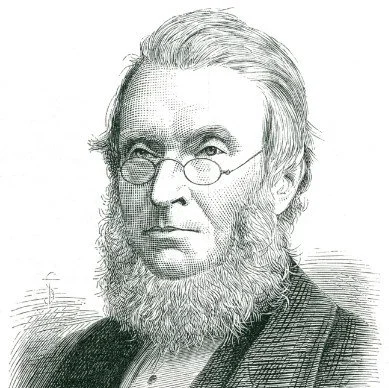
DECIMUS BURTON: BORN 1800
Architect of the Athenaeum Club and the Palm House at Kew Gardens.
Decimus Burton was born in the parish of St Pancras, London. Both his paternal grandfather, William Halibuton (1731-1785) and his father, James Burton (1761-1837), were London property developers. His first training in the architectural profession was with his father, supplemented by lessons in drawing and draughtsmanship from George Maddox (1760-1843). In November 1817, he entered the Royal Academy Schools in London where he attended lectures given by John Soane (1753-1837), professor of architecture.
Between 1817 and 1823 he designed or assisted in the design of a number of properties in Regent's Park in London, including his father's villa. He set up his own independent practice in London in April 1823 and was active as an an architect until his retirement in 1869, after which he partly lived in St. Leonards, East Sussex. His practice was continued by his nephew, Henry Marley Burton (1813-1880).
Burton was architect to the Royal Botanic Society from 1840. He became a Fellow of the Institute of British Architects (FIBA) [later Royal Institute of British Architects (FRIBA)] in 1834, the year it was founded. He was also a Fellow of the Royal Society and of the Society of Antiquaries. He died in Kensington, London on on 14 December 1881.
Notable London buildings designed by Decimus Burton include The Holme in Regent’s Park, the entrance archway to Hyde Park, the Athenaeum Club, and the Palm House at Kew Gardens.
PLACES
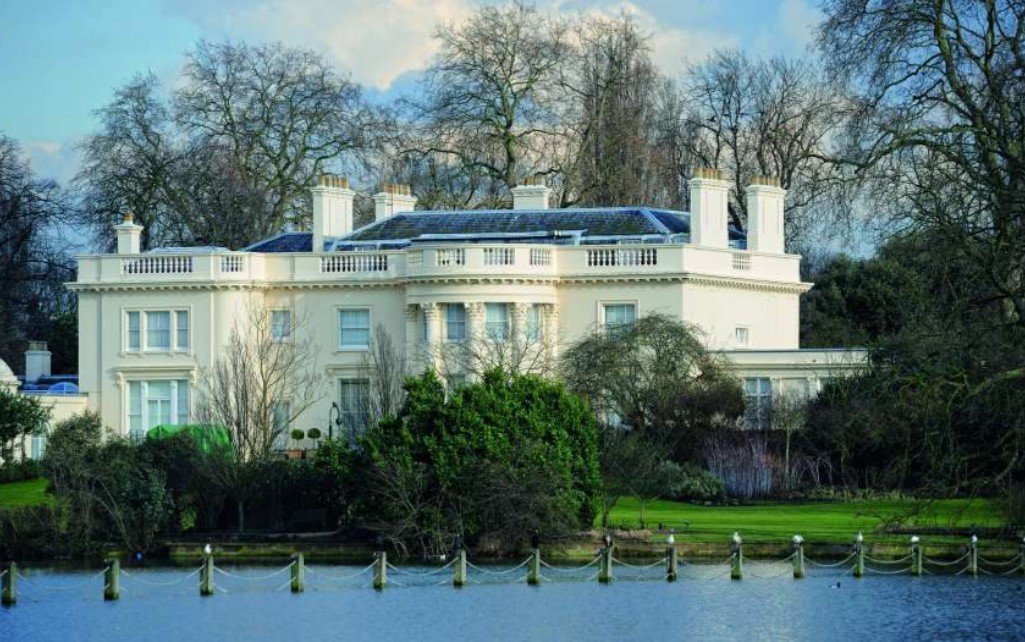
The Holme, Regent’s Park. NW1 4SP.
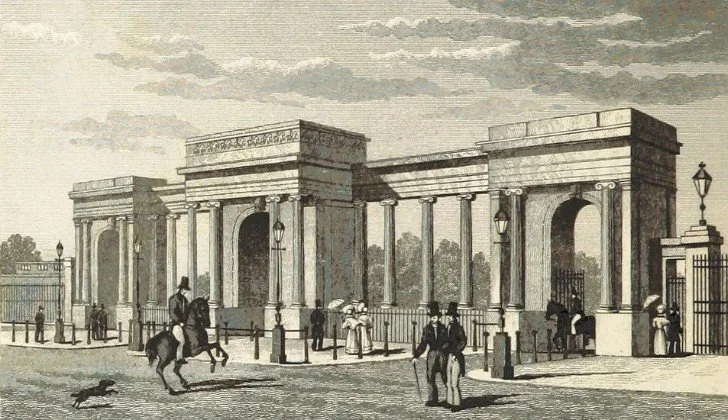
Entrance arch to Hyde Park at Hyde Park Corner. SW1X 7TA.
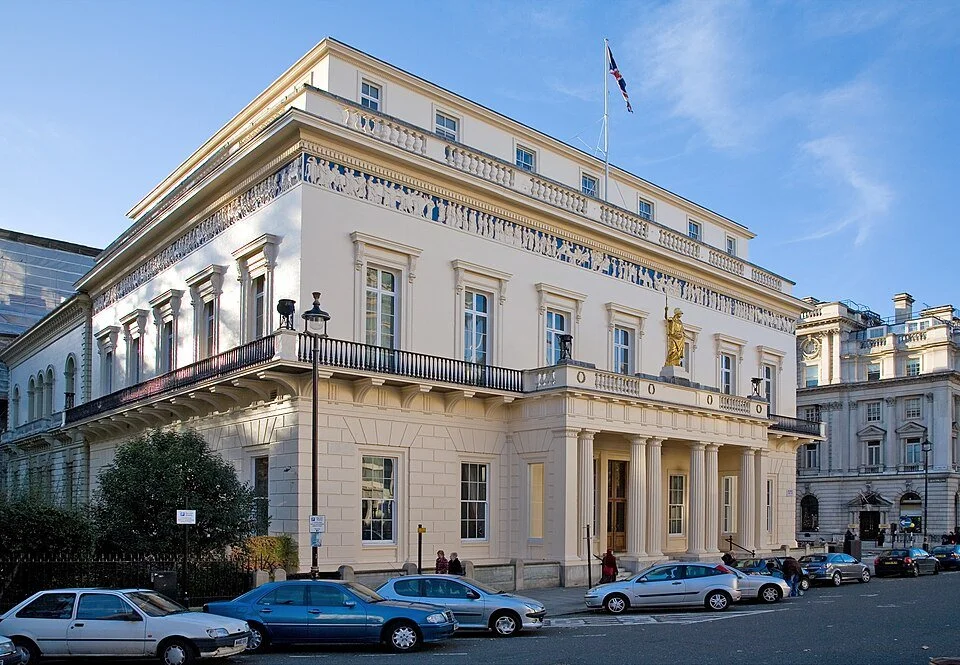
Athenaeum Club, Pall Mall, SW1Y 5ER.
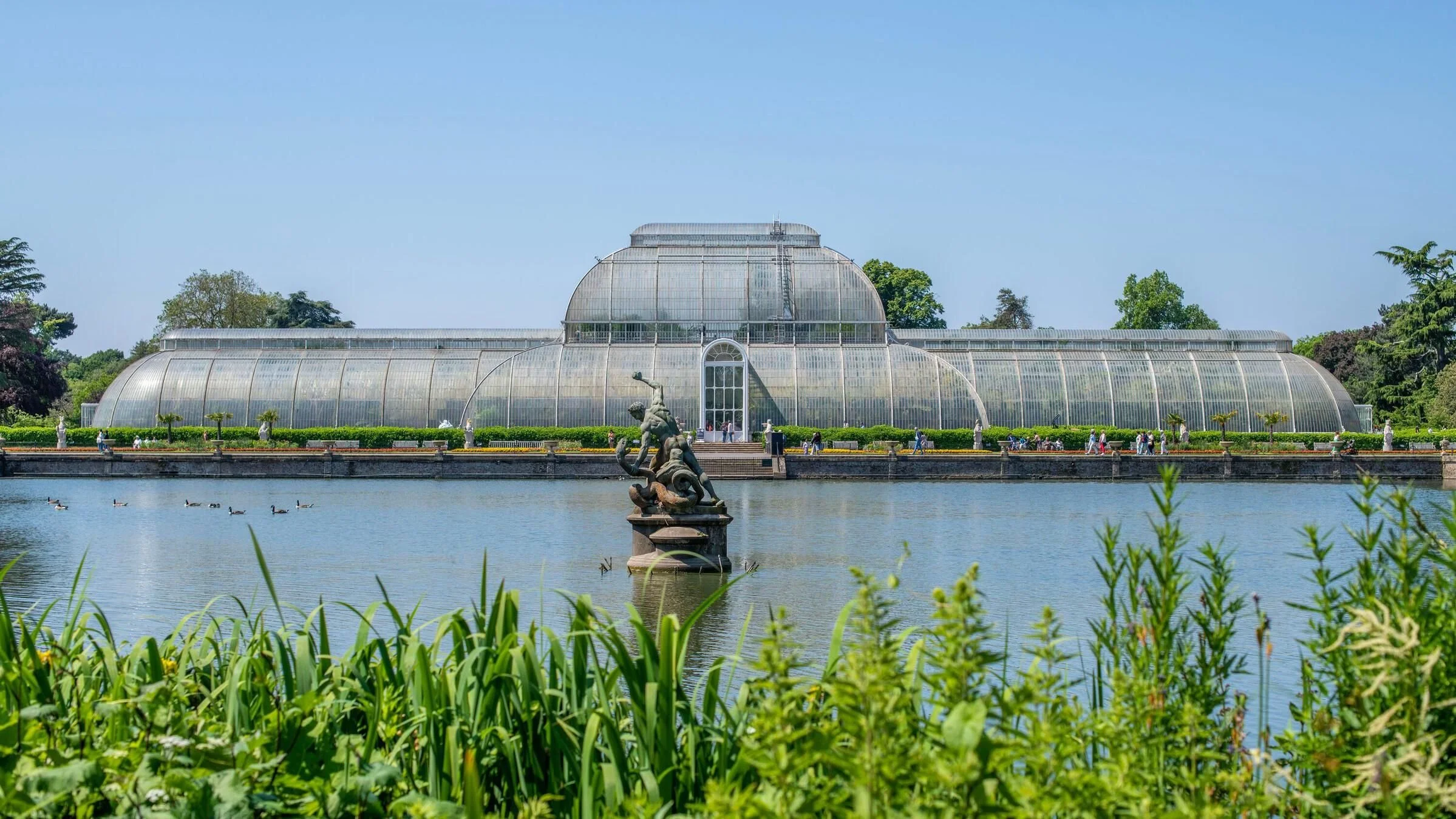
Palm House, Kew Gardens. TW9 3JR.
CLICK FOR BOOKS FROM AMAZON