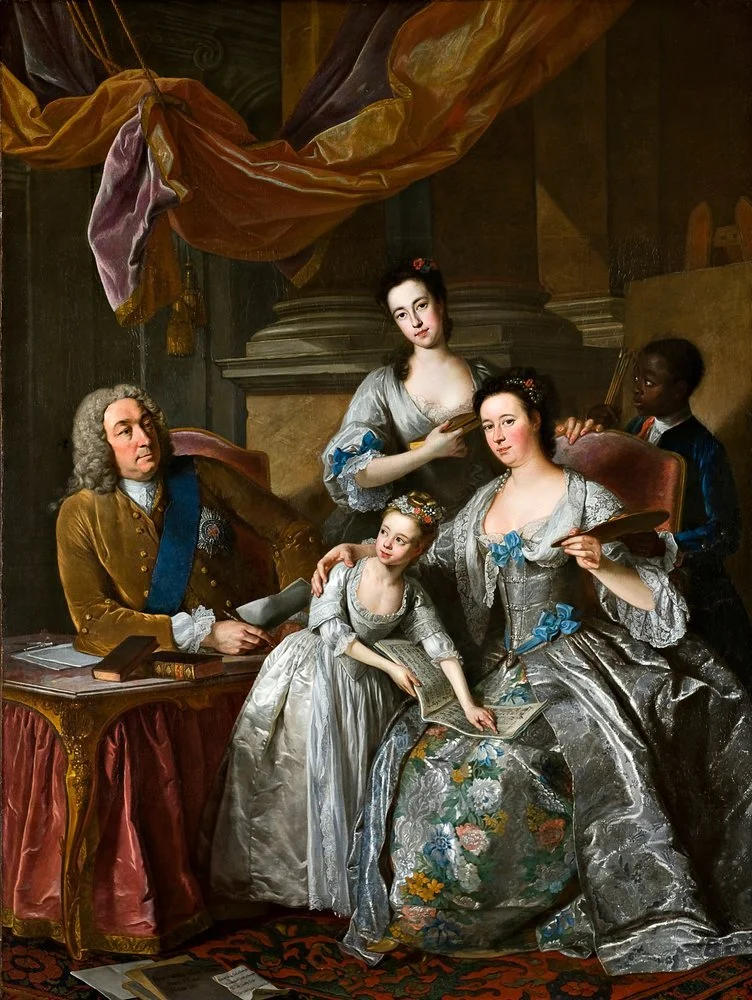
earl of burlington: BORN 1694
Architect of Chiswick House and Westminster School dormitory. The description below is extracted, with acknowledgement and thanks, from the Grub Street Project website at www.grubstreetproject.net.
When Richard, Lord Boyle, 3rd Earl of Burlingham, entered the world at Burlington House, Piccadilly, on 25 April 1694, he was truly born into the purple dyes of the Anglo-Irish aristocracy. The English earldom that he would inherit at the age of nine was not one of ancient lineage, as it had been bestowed on his great-grandfather in 1665. However, his Irish title as fourth Earl of Cork went back further, and brought with it huge landownings in Ireland previously granted to Sir Walter Ralegh.
The boy went on to live for almost sixty years, but he would never visit his Irish estates. Instead, he became an unwavering Europhile with cosmopolitan tastes as a collector and patron. It was Horace Walpole, himself regarded as the prime minister of taste, who called Burlington the Apollo of the Arts, a description based on the Earl’s activity as a practitioner and patron across a very wide range of cultural forms. The decisive phase of his life occurred when he took a Grand Tour in 1714–15, which created in him an enduring obsession with Italy, and was followed by a further trip to the south in 1719, which was designed chiefly to increase his understanding of Antonio Palladio’s villas in and around Vicenza. This experience underlay his own practice as an architect, which constitutes the main ground for continuing scholarly interest in his career. However, he took a keen interest in landscape gardening, music, literature and the fine arts generally, including painting, sculpture, and furniture.
Yet, for all his contacts with the wider world, much of his life was actually spent at his three main estates in England. His country seat was at Londesborough in East Yorkshire, while he owned land in other places dotted around the county. This meant that he was one of the leading figures in York society, exercising considerable electoral influence in the region. More important in terms of the arts were Burlington House in central London and Chiswick Villa on the outer fringes of the city, in a semi-countrified village close to the Thames that had not yet become a suburb. Most of the Earl’s professional activities radiated out from these two locations.
Burlington had a relatively short career as an architect. He began with a small building he added at Chiswick, originally a Jacobean mansion that the first Earl had bought in 1682. After this he devoted increasing attention to the site, and following the destruction by fire of an entire range in 1725 he set about constructing a new villa alongside its predecessor. The design, completed by 1728, was modelled fairly strictly on Palladio, except for the introduction of an octagonal dome to replace the more conventional circular kind. Equal attention was given to the gardens, landscaped in the 1720s and 1730s by Charles Bridgman and William Kent, with an input by Pope of some undefinable scope. Meanwhile the Earl had carried out extensive alterations to Burlington House, which had been purchased by the first Earl around 1666. At first he drew on the Baroque-flavoured architecture of James Gibbs before settling on Colen Campbell, who was more in tune with the prevailing Palladian taste. It was Campbell who was mainly responsible for the new look given to the site in Piccadilly.
For a while Burlington carried out other architectural commissions, of which the most prominent were his stately dormitory for Westminster School (an establishment then operating as a nursery for the British ruling class), and a more elaborate design for the Assembly Rooms at York, in effect his home town outside the capital.
He is famous for the practical help that, unlike many showy patrons, he gave to those working in the arts. Soon after George Friderick Handel arrived in London at the start of his long residence in Britain, the composer was given lodgings in Burlington House—and stayed there for three years. Burlington brought back from Rome three musicians who played in theatre orchestras performing Handel operas. He was a founding director of the Royal Academy of Music in 1719, and would remain a supporter of Handel until the events of 1733 left him aligned in the Opposition with the Prince of Wales—the politics of opera meant that he was thus attached to an alternative camp favouring Giovanni Bononcini.
The Italian writer and adventurer, Francesco Algoratti, once spoke enthusiastically to Frederick the Great of Prussia about the Earl as “the restorer of true architecture.” His name was known throughout Europe, even though he did little by way of self-advertisement. Chiswick House and Gardens are now run by a trust and open to the public.
PLACES
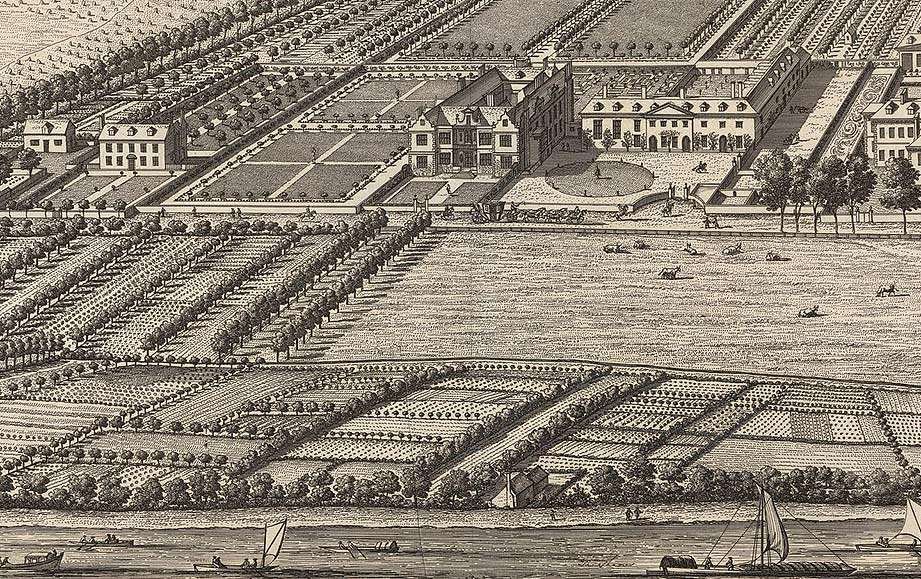
The original Chiswick House and its grounds.
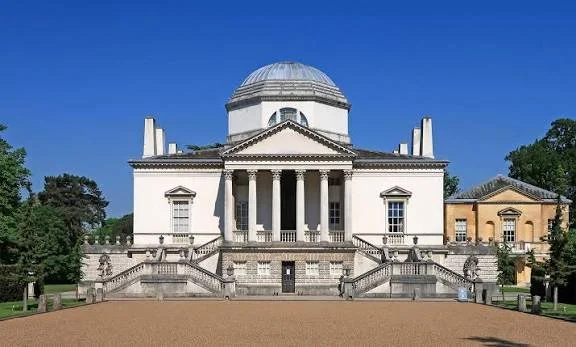
Burlington’s Chiswick House, W4 2RP.
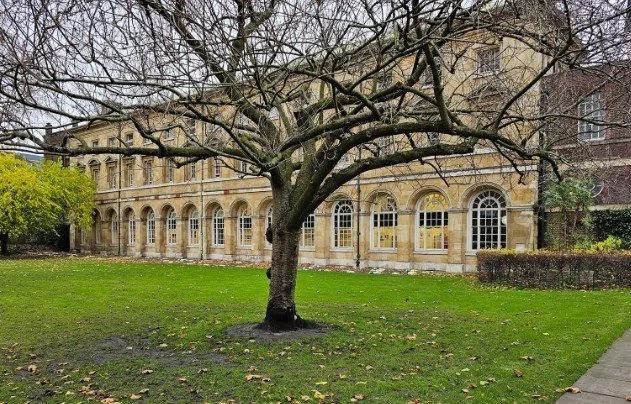
Dormitory, Westminster School. SW1P 3PF.
CLICK FOR BOOKS FROM AMAZON