JOSEPH BAZALGETTE: BORN 1795
Joseph Bazalgette was a highly successful civil engineer, who revolutionised London’s water supply and sewerage systems. He also designed the iconic cast ireon Hammersmith Bridge. The following is extracted, with acknowledgement and thanks, from the website of the Institution of Civil Enginers at www.ice.org.uk.
Early in his career, Sir Joseph Bazalgette set up a private consultancy in 1842 with an office in Great George Street, Westminster. As a consulting engineer, he worked on the Tame Valley Canal in Birmingham, at Portsmouth Dockyard, and was heavily involved in surveys for railways.
However, stress and overwork contributed to a serious breakdown in Bazalgette’s health, and between 1847 and 1848, he left London to recuperate in the country. When he recovered, Sir Joseph returned to London. On 16 August 1849, he was appointed assistant surveyor to the second Metropolitan Commission of Sewers, on a salary of £250 a year. In 1852, he was appointed engineer at the Metropolitan Commission, until it was replaced by the Metropolitan Board of Works (MBW).
Bazalgette was elected engineer to the board on 25 January 1856 on a salary of £1,000 a year. He stayed in the role until the MBW was replaced by the London County Council in 1889.
A map showing where the new sewers would be located.
A map showing where the new sewers would be located.
Draining London
The first work of the MBW was to finish the design and implement the plans for the main drainage of London. The whole system consisted of 1,300 miles of sewers and 82 miles of west-east intercepting sewers. It also included Abbey Mills pumping station at Stratford, Western pumping station at Pimlico, Deptford Pumping Station, Crossness Pumping Station, and the Southern Outfall Sewer.
As part of the drainage system, Sir Joseph embanked the river Thames in central London, which he said reclaimed about 52 acres of land. The embankments tidied the mud banks on the river’s edge, improved road traffic flow, and created additional building land. These comprised the Victoria Embankment (opened 1879), which runs between Westminster and Blackfriars Bridges, the Albert Embankment (opened 1868) on the south bank between Westminster and Vauxhall Bridges, and the Chelsea Embankment (completed 1874).
As well as working on London’s sewers, Sir Joseph influenced the city’s bridges and roads. In 1888, he wrote a report which led to MBW buying 12 bridges for just under £1.5m from their corporate owners and freeing them from tolls. The bridges included Hammersmith, Putney, Wandsworth, Vauxhall, Waterloo and Charing Cross.
A large maintenance programme was carried out following the purchase, and Sir Joseph decided to replace three of the bridges – Putney, Hammersmith and Battersea – with new structures of his own design.
To ease congestion due to horse-drawn traffic in London, Sir Joseph also started a major programme of design and construction of new streets in London. Examples of these are Southwark Street (1864), Queen Victoria Street (1871), Northumberland Avenue (1876), Shaftesbury Avenue (1886), and Charing Cross Road.
Sir Joseph William Bazalgette was born on on 28 March 1819 in Enfield, MiddlesexHe was the only son, and fourth child, of naval officer Joseph William Bazalgette and Theresa Philo Pilton. His surname has French origins. Joseph’s grandfather, Jean Louis, was born in southern France and arrived in England in 1784.
Sir Joseph married Maria Keogh from County Wexford, Ireland, on 20 February 1845 at St Margaret’s in Westminster, London. The couple had six sons and four daughters. Sir Joseph was described as “slight and square” and “considerably under the average height”.
He was given a “retiring allowance” of £1,333 6s 8d a year – two thirds of his salary – from 25 March 1889. During his retirement, he rode for two or three hours a day. “I find it splendid exercise for counteracting the effects of a sedentary life,” Sir Joseph Bazalgette said. He also kept a couple of cows, and made “a little hay” in summer.
Sir Joseph was made a Commander of the Bath in 1871 and knighted in 1874. He died at his home in Wimbledon on 15 March 1891, at the age of 72, just two years after his retirement.
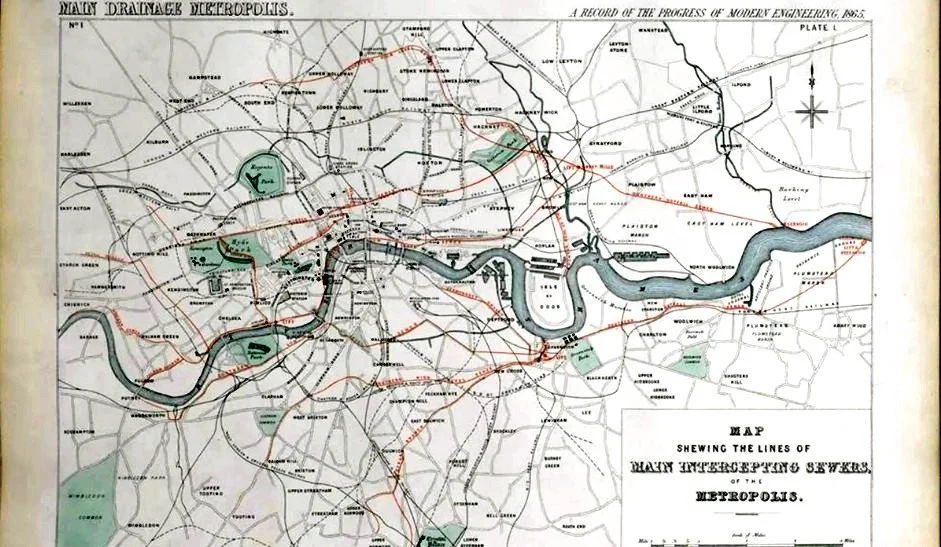
Map showing Bazalgette’s massive network of new sewers, shown in red.
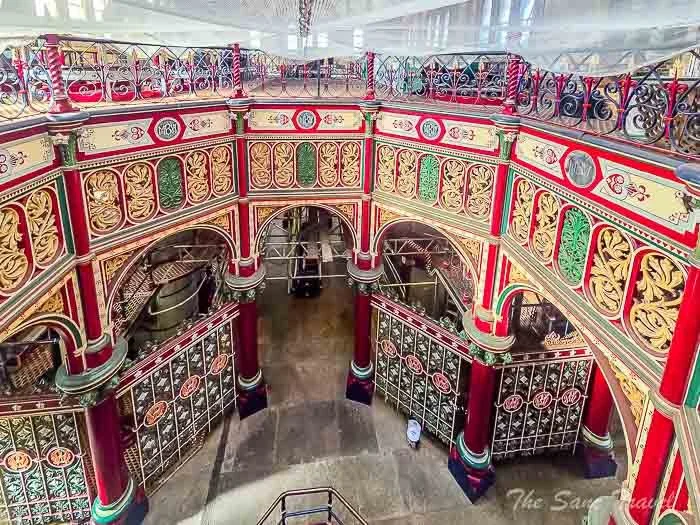
Crossness Pumping Station. Bazalgette’s exuberant celebration of Victorian civil engineering.
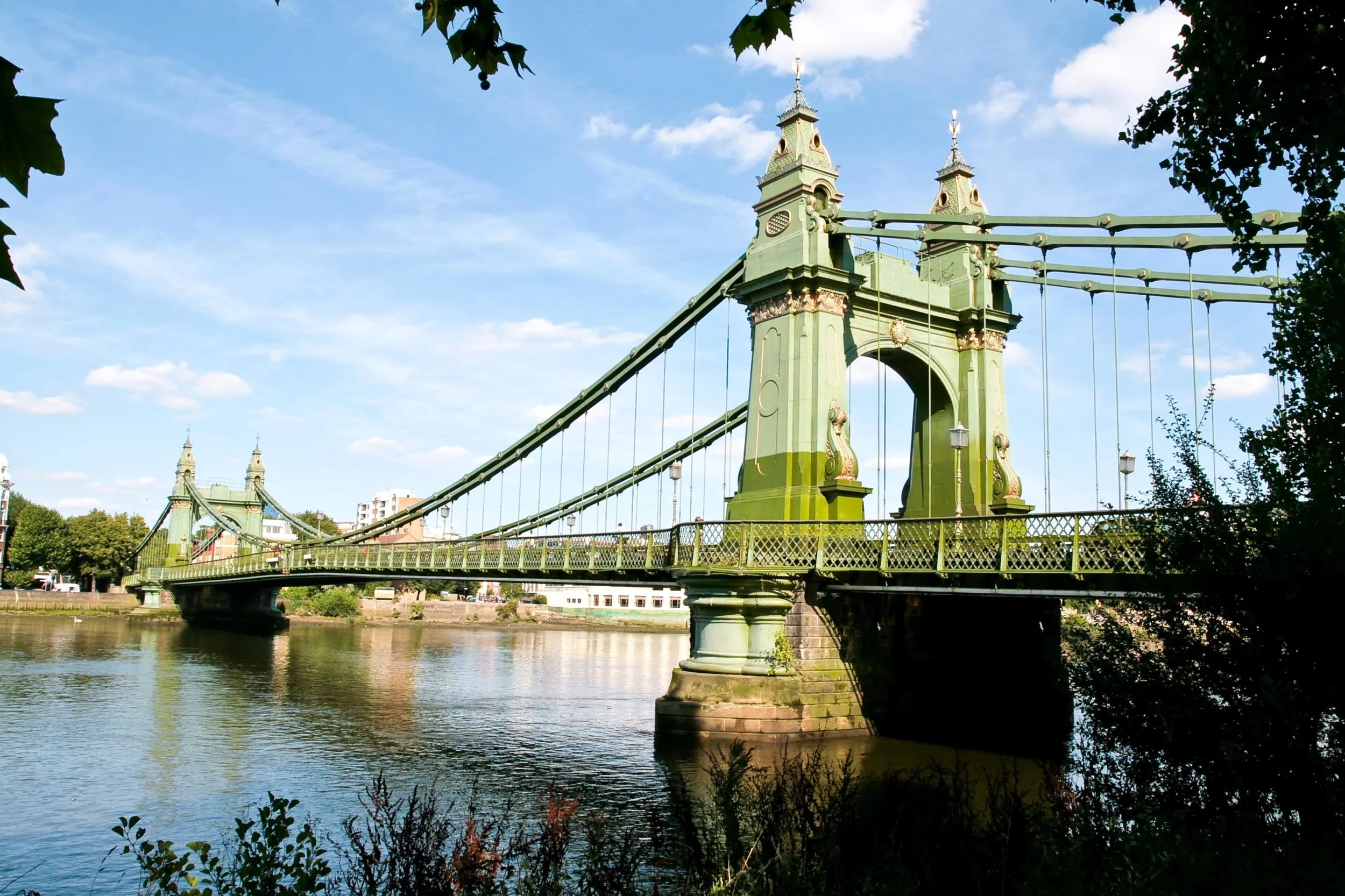
Bazalgette’s spectacular cast iron Hammersmith Bridge.
CLICK FOR BOOKS FROM AMAZON