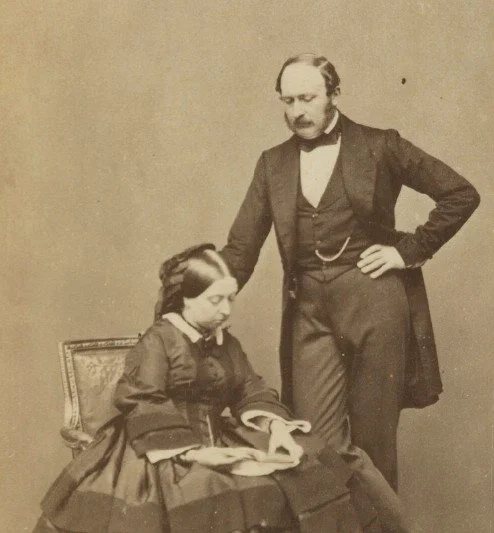
prince albert: BORN 1819
Husband of Queen Victoria. The driving force behind the 1851 Great Exhibition in the Crystal Palace, and the use of the proceeds to establish the South Kensington museums.
BOOKS at amazon
LIFE
Albert was born in the Saxon duchy of Saxe-Coburg-Saalfeld to a family connected to many of Europe's ruling monarchs. At the age of 20, he married Victoria, his first cousin, with whom he had nine children. Initially, he felt constrained by his role as consort, which did not afford him power or responsibilities. He gradually developed a reputation for supporting public causes, such as educational reform and the abolition of slavery worldwide, and was entrusted with running the Queen's household, office and estates. He was heavily involved with the organisation of the Great Exhibition of 1851, which was a resounding success.
Victoria came to depend more and more on Albert's support and guidance. He aided the development of Britain's constitutional monarchy by persuading his wife to be less partisan in her dealings with the British parliament, but he actively disagreed with the interventionist foreign policy pursued during Lord Palmerston's tenure as Foreign Secretary. Albert died in 1861 at the age of 42, devastating Victoria so much that she entered into a deep state of mourning and wore black for the rest of her life. On the day of her death in 1901, their eldest son succeeded as Edward VII, the first British monarch of the House of Saxe-Coburg and Gotha, named after the ducal house to which Albert belonged.
Prince Albert’s outstanding contribution to London was as the primary visionary, organizer, and driving force behind "Albertopolis" in South Kensington. Alongside Sir Henry Cole, Albert championed and organized the wildly successful 1851 Great Exhibition in Hyde Park. As president of the Royal Commission for the Exhibition, he overcame intense political opposition to make it happen.
Albert used the massive financial surplus generated by the Great Exhibition to buy an 87-acre estate of agricultural land in South Kensington. His goal was to turn the area into a permanent national center for science, art, industry, and education. He laid out the grand design for the district, intending to house interconnected museums, colleges, and exhibition spaces. Though he died in 1861 before seeing the full realization of his master plan, the land he secured became the foundation for world-famous institutions including the Victoria and Albert Museum, the Science Museum, the Natural History Museum, Imperial College London, and the Royal Albert Hall.
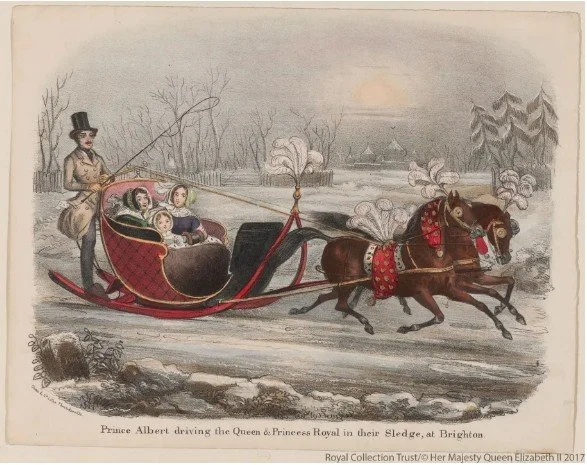
Prince Albert and his young family enjoying a sledge ride at Brighton.
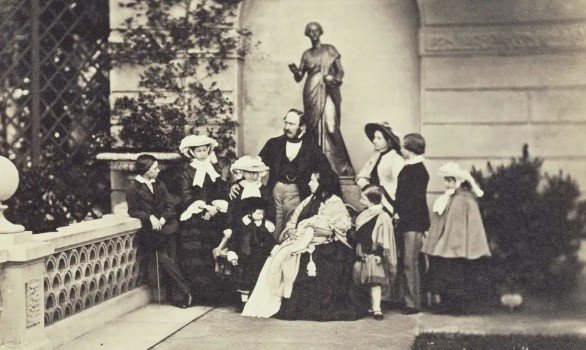
Price Albert and Queen Victoria with all their children on holiday at Osborne House, Isle of Wight.
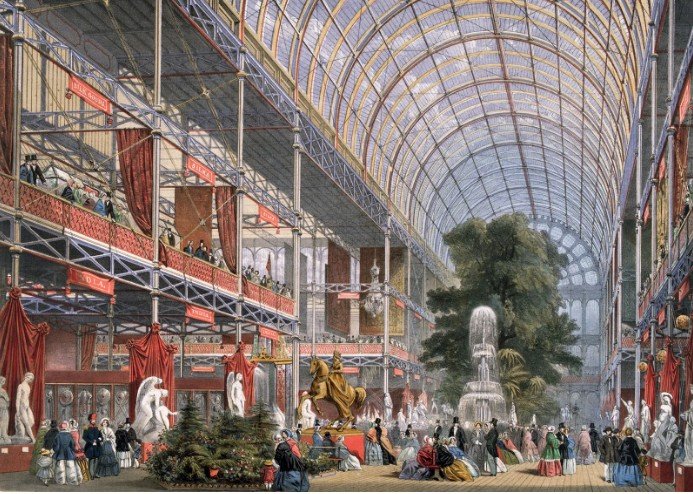
Interior of the 1851 Great Exhibition in the Crystal Palace, inspired by Prince Albert and designed by Joseph Paxton. Appropriately, the building was 1851 feet long. After the Great Exhibition it was dismantled and re-erected in south London in the area now known as Crystal Palace. It was sadly destroyed by fire in 1936.
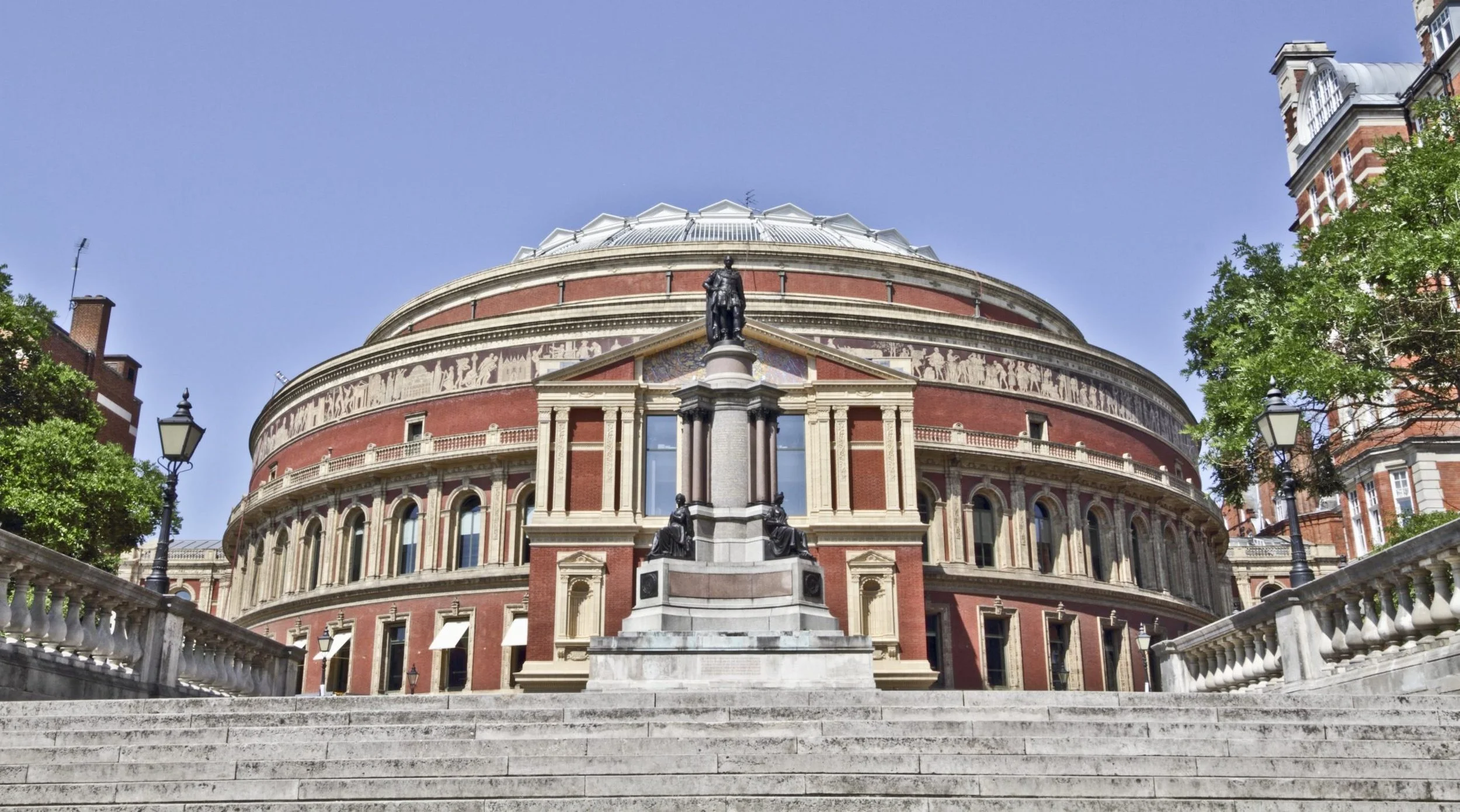
Royal Albert Hall, part of Prince Albert’s grand scheme for a South Kensington cultural quarter, with buildings funded by the profits from the 1851 Great Exhibition.