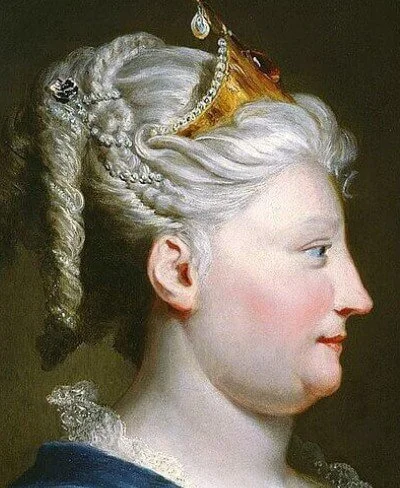
QUEEN CAROLINE: BORN 1683
Queen Caroline of Ansbach was the wife of George II. She had a great impact on the arts, on learning, on politics, and on court life. We owe to her the Serpentine lake in Hyde Park.
BOOKS at amazon
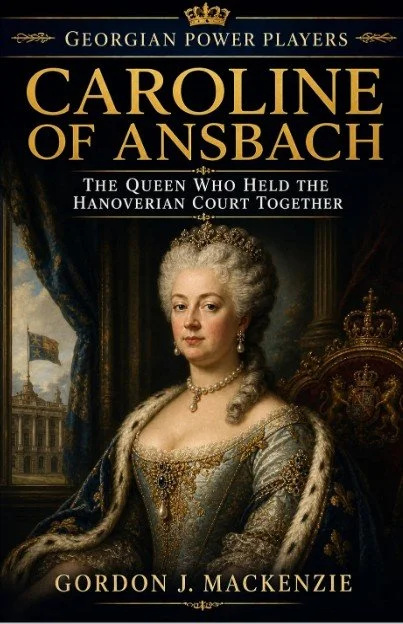
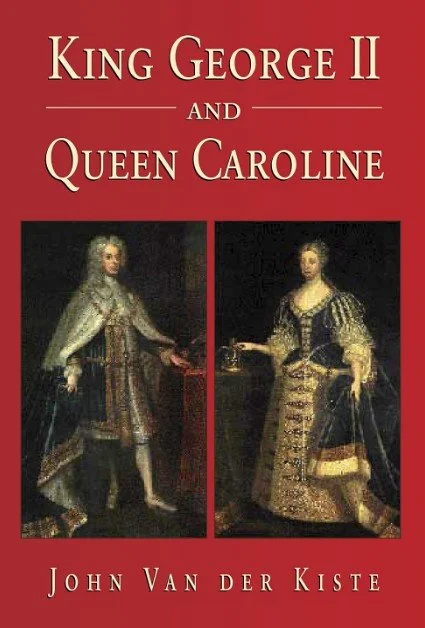
LIFE
The following is extracted, with acknowledgement and thanks, from the An Historian About Town website.
Caroline was born in Ansbach in 1683 but her early life was fairly chaotic, as her father died when she was only three years old. Her mother then died when Caroline was thirteen and she eventually found herself under the guardianship of Frederick, Elector of Brandenburg and Sophia Charlotte in 1696. In 1701, the couple became King and Queen of Prussia and played host to one of the most erudite courts in Europe. And Caroline took full advantage- she became well-acquainted with the leading philosophers, theologians, and scholars of the period.
In August 1705, Caroline married Prince George Augustus of Hanover. The son of the Elector of Hanover, George sought a love match rather than an arranged marriage. (His parents’ arranged marriage was famously horrendous, with his mother- Sophia Dorothea of Celle- imprisoned in a castle for decades.) The couple immediately hit it off.
Prince Frederick was born to the couple in January 1707; Frederick was followed by Anne, Amelia, and Caroline. Although George kept mistresses, the couple had a strong marriage and were reportedly incredibly happy together. Queen Anne of Great Britain died in August 1704, and as her father-in-law was now King George I of Great Britain, Caroline followed her husband (as heir to the throne) to Britain.
Caroline was intelligent and understood that becoming more English was key to the couple’s success. She encouraged her family to learn English, in addition to immersing themselves in English culture and politics. As would become a trend for the Hanoverians, Caroline and George did not get along with his father who remained very German, and they quickly established a rival, more Anglicised court. In 1717, the couple fell out with the King over the baptism of their newborn son, and they were banished from court, including being separated from their children.
Caroline was a Renaissance queen if one ever existed. She cultivated a massive library at their home in St. James’s Palace, as well as a major art collection. The Princess was also a strong advocate for scientific advancement, including supporting scholars working in physics and promoting variolation (the precursor to what we know as immunisation). French philosopher Voltaire spoke highly of Caroline, writing, “I must say that despite all her titles and crowns, this princess was born to encourage the arts and the well-being of mankind”.
Caroline also had a great amount of political influence, both as Princess of Wales and then Queen. She worked closely with Prime Minister Robert Walpole (despite her husband’s dislike of him) and was able to influence several policies. The Queen also served as Regent when George would return to Hanover (where he was also ruler) and in 1729 played a major role as Regent in the negotiation of the Treaty of Seville.
Caroline suffered from serious health issues in the last decade of her life, notably an umbilical hernia from her last child birth in 1724. In 1737, she fell gravely ill when her small intestine finally pushed through the hole, and without anaesthesia, doctors cut the piece of the small intestine off. (Obviously, doctors understand now that this is not how to treat a hernia.) On 20 November, she died.
Caroline had told George to remarry when she was gone, but George refused. He had her buried in Westminster Abbey with a coffin with a removable side - he was buried beside her after his death in 1760.
THE SERPENTINE
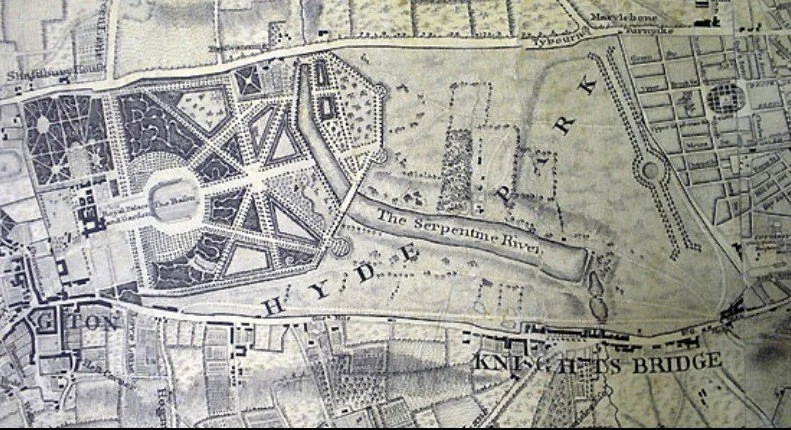
The Serpentine (also known as the Serpentine River) is a 40-acre (16 ha) recreational lake in Hyde Park, London, England, created in 1730 at the behest of Queen Caroline. Although it is common to refer to the entire body of water as the Serpentine, the name refers in the strict sense only to the eastern half of the lake. Serpentine Bridge, which marks the boundary between Hyde Park and Kensington Gardens, also marks the Serpentine's western boundary; the long and narrow western half of the lake is known as the Long Water. The Serpentine takes its name from its snakelike, curving shape,[1] although it only has one bend.
Originally fed by the River Westbourne and Tyburn Brook in the 1730s, the lake's water was then pumped from the Thames in the 1830s. The water is now pumped from three boreholes within Hyde Park, the most recent being installed in May 2012 as part of the 2011–2012 restoration of the lake. The Serpentine provided a focal point for The Great Exhibition of 1851, and more recently was a venue for the men's and women's triathlon and marathon swimming events in the London 2012 Olympics. Since 1864, the Serpentine Swimming Club has organised a 100-yard race every Christmas morning. In 1913, the Peter Pan Cup was inaugurated for this race by J. M. Barrie, the creator of the fictional character Peter Pan.
Originally the lake was fed by the River Westbourne entering at the Italian Garden at the north-western end of the Long Water. The Westbourne ceased to provide the water for the Serpentine in 1834, as it had become polluted[2] so water was for some years pumped from the tidal Thames. The water is now supplied by three boreholes drilled into the Upper Chalk. The first borehole is at the Italian Gardens, the second at the Diana Memorial and the third, drilled in 2012 to a depth of 132 m (433 ft), is within 50 m (160 ft) of there. The Long Water runs south-east from this point to Serpentine Bridge, where the lake curves to the east, following the natural contours of the land. At the eastern end, water flows out via a sluice in the dam, forming a small ornamental waterfall at the Dell where a small garden exists landscaped in the 1870s by Lord Redesdale. The outflow has not historically maintained the waterfall, and re-circulation pumps were installed in the Dell, below the dam, to sustain this feature. The restoration work in 2012 restored the flows into the Serpentine and this waterfall is now restored as originally designed. Historically the river flowed mainly exposed due south from this point as the mutual limits of Westminster and Kensington, but since 1850 is culverted (runs underground) to reach the Thames near Chelsea Bridge.[4]
History
In 1730 Queen Caroline, wife of George II, ordered the damming of the River Westbourne in Hyde Park as part of a general redevelopment of Hyde Park and Kensington Gardens. Original monastic ponds may have existed in the location and these were modified as part of the 1730–1732 scheme to create a single lake. At that time, the Westbourne formed eleven natural ponds in the park. During the 1730s, the lake filled to its current size and shape. The redevelopment was carried out by Royal Gardener Charles Bridgeman, who dammed the Westbourne to create the artificial lake, and dug a large pond in the centre of Kensington Gardens (The Round Pond) to be a focal point for pathways in the park.
At the time of construction, artificial lakes were typically long and straight garden canals, as at St James's Park, where the canal was excavated in the 1660s (later turned into a curving lake). The Serpentine was one of the earliest artificial lakes designed to appear natural, was widely imitated in parks and gardens nationwide.
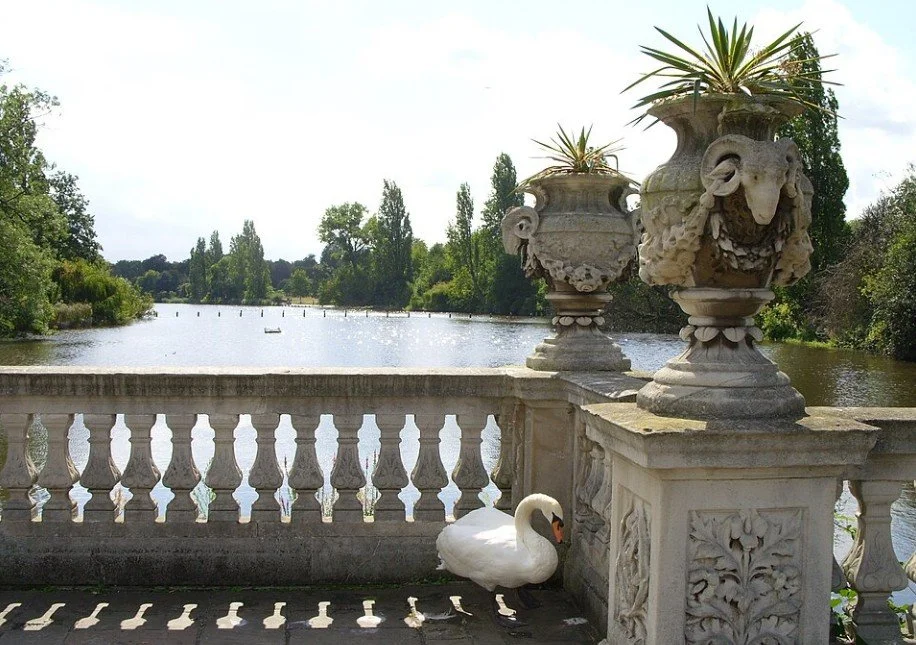
The Long Water viewed from the Italian Gardens.