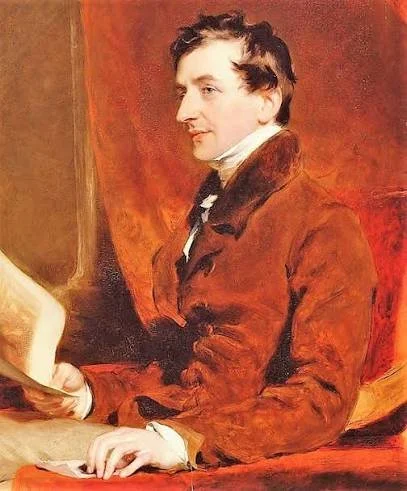
SAMUEL BAKER: BORN 1711
Founder of Sotheby’s auction house. The following biographical note is reproduced, with acknowledgement and thanks, from the Sotherby’s website.
Sotheby’s founder, Samuel Baker, was an entrepreneur, occasional publisher and successful bookseller who held his first auction under his own name on 11 March 1744. The dispersal of “several Hundred scarce and valuable Books in all branches of Polite Literature” from the library of Sir John Stanley fetched a grand total of £826.
Baker concocted enticing advertising campaigns and produced authoritative catalogues. He was, as one colleague noted, a “joyous fellow” with a fondness for plum-coloured coats.
For more than a century, Baker and his successors were to handle all of the great libraries sold at auction, including those of the Earls of Sunderland, Hopetoun and Pembroke and the Dukes of Devonshire, York and Buckingham. Following Napoleon’s death, Sotheby’s sold the books he had taken into exile to St Helena – the final lot was the Emperor’s tortoiseshell-and-gold walking stick.
In 1767 Baker went into partnership with George Leigh. Leigh was a natural auctioneer with an actor’s sense of timing. His ivory hammer is still on display at Sotheby’s London galleries. On Baker’s death in 1778, his estate was divided between Leigh and Baker’s nephew John Sotheby, whose family remained involved in the business for more than 80 years. During that time the company extended its role to take in the sale of prints, coins, medals and antiquities.
In 1842 John Wilkinson, the firm’s senior accountant, became a partner and when the last of the Sotheby family died in 1861, Wilkinson took over as head of the business. Three years later he promoted Edward Grose Hodge, and restyled the company Sotheby, Wilkinson and Hodge, the name it carried until 1924.
Following Hodge’s death in 1907, his son Tom brought in new associates: Montague Barlow, a Barrister and MP, Felix Warre, a banker, and Geoffrey Hobson, a young Foreign Office official. Their first great success was the sale of the Huth library, which was dispersed over 12 sales, from 1911 to 1922, and netted £300,000.
Their second triumph, during the summer of 1917, was to move the company’s premises from Wellington Street – off the Strand – to 34-35 New Bond Street in Mayfair. This took Sotheby’s from the heart of the book world to the hub of the art world.
The building had been, variously, the galleries of the French artist Gustave Doré, a parfumiers and a hostelry called the Black Horse. The wine cellars were turned into picture stores and an ancient Egyptian bust of the lion-goddess Sekhmet – Sotheby’s unofficial mascot – was installed above the front doorway.
The move generated other changes. The First World War saw many of the male members of staff enlist in the Services and, for the first time, women joined the company, both in support and specialist roles. Emily Millicent Sowerby, the firm’s first female books cataloguer, observed: “It is the most stimulating and educating experience it is possible to have.”
During the interwar years, Sotheby’s turned its focus to the sale of pictures and decorative works of art. This coincided with the beginning of the end of a way of life for many of the owners of Britain’s country houses. Sotheby’s became so skilled in staging swift onsite sales of their contents that its specialist team became known as “The Flying Squad.”
Throughout the Second World War, Sotheby’s continued to trade successfully in London, turning its basement into an air-raid shelter – although collectors refused to leave the saleroom in case they missed a bid.
PLACES
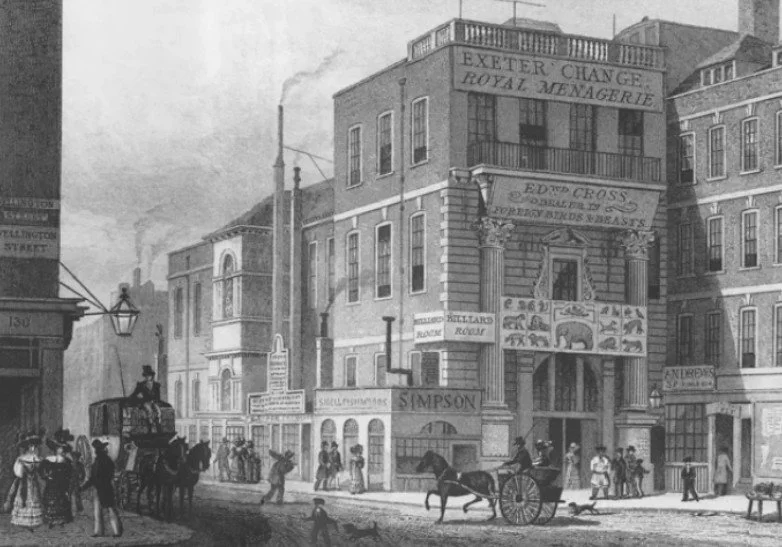
Sotherby’s first sale took place in 1744 in what was known as the Exeter Exchange in the Strand. Later this building housed a zoo and other attractions.
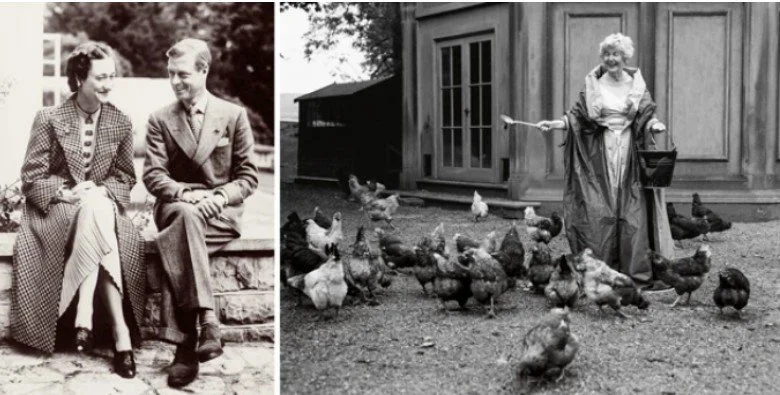
Sotheby’s soldd the collections of the Duchess of Windsor (left) and the Duchess of Devonshire (with chickens, right).
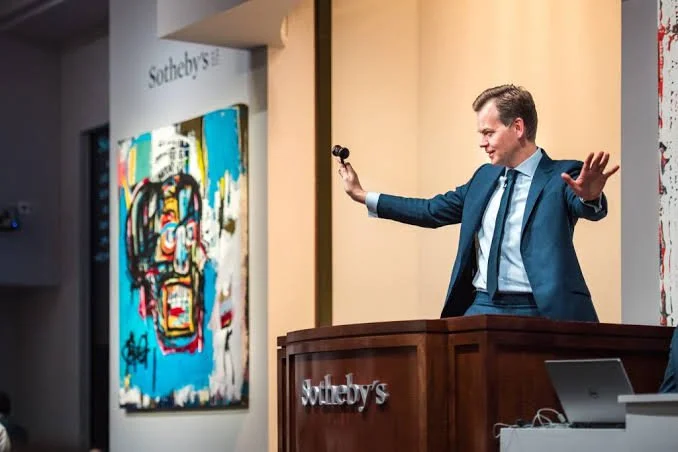
Sotherby’s today. Its main London auction room is at 34-35 New Bond Street, W1A 2AA.
CLICK FOR BOOKS FROM AMAZON