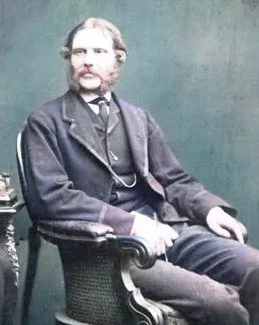
FRANCIS FOWKE: BORN 1823
ALBERT HALL ARCHITECT
Francis Fowke was an officer in the Royal Engineers who was a noted architect. He was also an inventor whose inventions included a military fire engine, an improved umbrella and a portable bath. His collapsible, lightweight bathtub was made of vulcanized India rubber and could be folded down completely flat. This made it exceptionally easy to pack into a traveler's luggage or an officer's military kit.
His great work was the Royal Albert Hall. One of its remarkable features is the great glazed dome, with its wrought iron structure. It was manufactured in Manchester, where it was assembled for test purposes. After disassembly it travelled to London by horse and cart. It was installed, and before the supporting structure was removed all except volunteers left the building in case of collapse. In the event it dropped only five sixteenths of an inch and all was well. Queen Victoria visited to inspect, and the building was opened a few months later in March 1871. It remains in intensive use today for a variety of activities including concerts, assemblies, mass choral events, and acrobatic circus. It is referred to fondly as London’s village hall.
BOOKS FROM AMAZON

LIFE
The following account of the life of Francis Fowke was extracted, with acknowledgement and thanks, from the website of the Bradford Museum of Science and Media at www.scienceandmediamuseum.org.uk.
Francis Fowke was born in Ballysillan, Belfast in 1823 and was commissioned into the Royal Engineers in 1842. He is best known as an architect but his creativity also found an outlet in a stream of ingenious inventions, including a military fire engine, an improved umbrella and a portable bath.
As an architect, Fowke specialised in designing government commissions, combining classical renaissance styles with modern technologies to create large iron-framed buildings with glazed open galleries. A favourite of Prince Albert, Fowke was responsible for buildings in ‘Albertopolis’—the area in South Kensington bought with the profits from the Great Exhibition of 1851—including the Victoria and Albert Museum and the Royal Albert Hall.
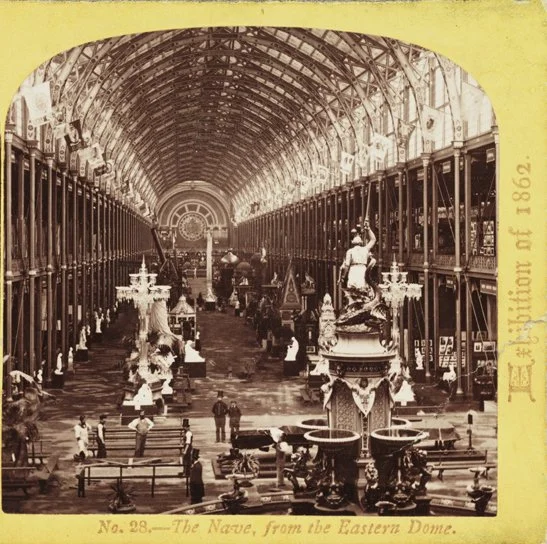
‘The Nave, From the Eastern Dome’, 1862, London Stereoscopic Company, Kodak Collection, Science Museum Group collection
He was the obvious choice to design the building for the International Exhibition of 1862. Completed on time and to a budget of £300,000, the enormous building he created was ornamented with, at the time, the two largest domes in the world. However, it didn’t capture the imagination of the public like Paxton’s design for the Crystal Palace ten years earlier. The Art Journal, somewhat harshly, described it as ‘a wretched shed’. At the end of the exhibition the building was demolished and the materials were used in the construction of Alexandra Palace.
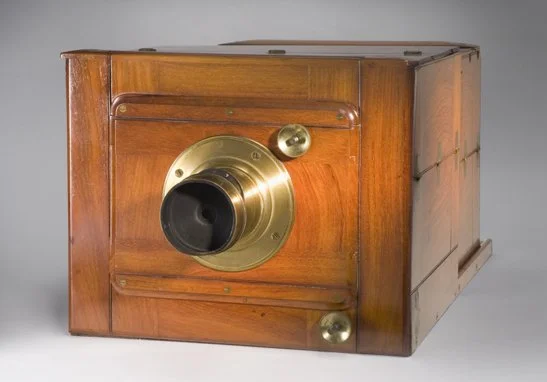
Fowke is known primarily as an architect—but his other claim to fame is that he was the designer of one of the first cameras to use bellows.
Sliding box cameras (above), the standard design of the 1840s and early 1850s, were heavy and bulky. Attempts had been made to alleviate this drawback by introducing collapsible, folding versions, such as Ottewill’s double folding camera of 1853.
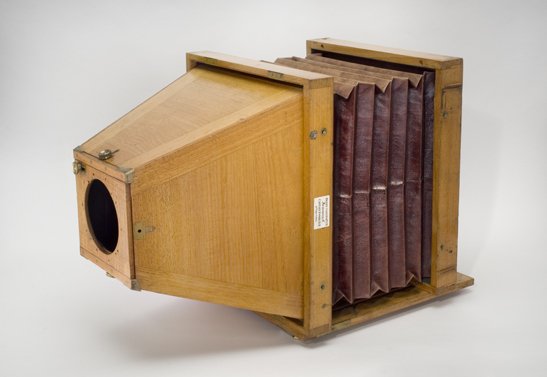
Ottewill folding box camera, 1853, T Ottewill and Company, Kodak Collection, Science Museum Group collection
The longer term solution, however, lay in linking the lens panel to the plate holder with some form of flexible bag or bellows. As early as 1839, French inventor Baron de Seguier came up with a design for a daguerreotype camera fitted with bellows. However, it wasn’t until the 1850s that the first commercial bellows cameras appeared. Indeed, if you had mentioned the word ‘bellows’ to a photographer in 1850, they would probably have thought about that recent musical novelty, the concertina, patented by Charles Wheatstone in 1844.
In Britain, a number of prototype designs for cameras with flexible bodies appeared in the early 1850s, such as those by Richard Willats and Major Halkett. However, the first bellows cameras to come into general use were made in America. In November 1851, William Lewis (father) and William Lewis (son) of New York were issued with a patent for a daguerreotype camera fitted with square-section bellows.
The first British camera to use concertina-pattern pleated bellows was patented by Fowke in May 1856. Fowke’s camera had rectangular-section leather bellows connecting two wooden frames. A removable baseboard could be fitted on to either the long or short sides of these frames for horizontal or vertical-format pictures. A brass rod, attached to the back panel, gave extra support and stability. The lens was fitted onto a four-sided wooden extension shaped like a truncated pyramid.
Fowke’s camera was manufactured from the summer of 1857 by the London firm of Ottewill & Co. Through Fowke’s contacts, Ottewill secured a government contract to supply the cameras to the Royal Engineers. Their adverts describe it as:
Invented for and used by the Royal Engineers… the most portable as well as the lightest camera in use.
When collapsed and folded flat, the camera measured only 13 by 10½ by 3½ inches.
Fowke died suddenly in 1865 from a burst blood vessel, aged just 42. His camera was presented to the Science Museum by his son in 1908 and is now part of our collection.
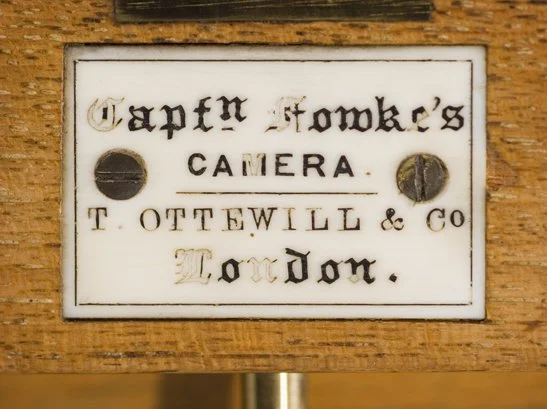
Plaque on Captain Fowke’s camera, 1856, presented to the Science Museum in 1908
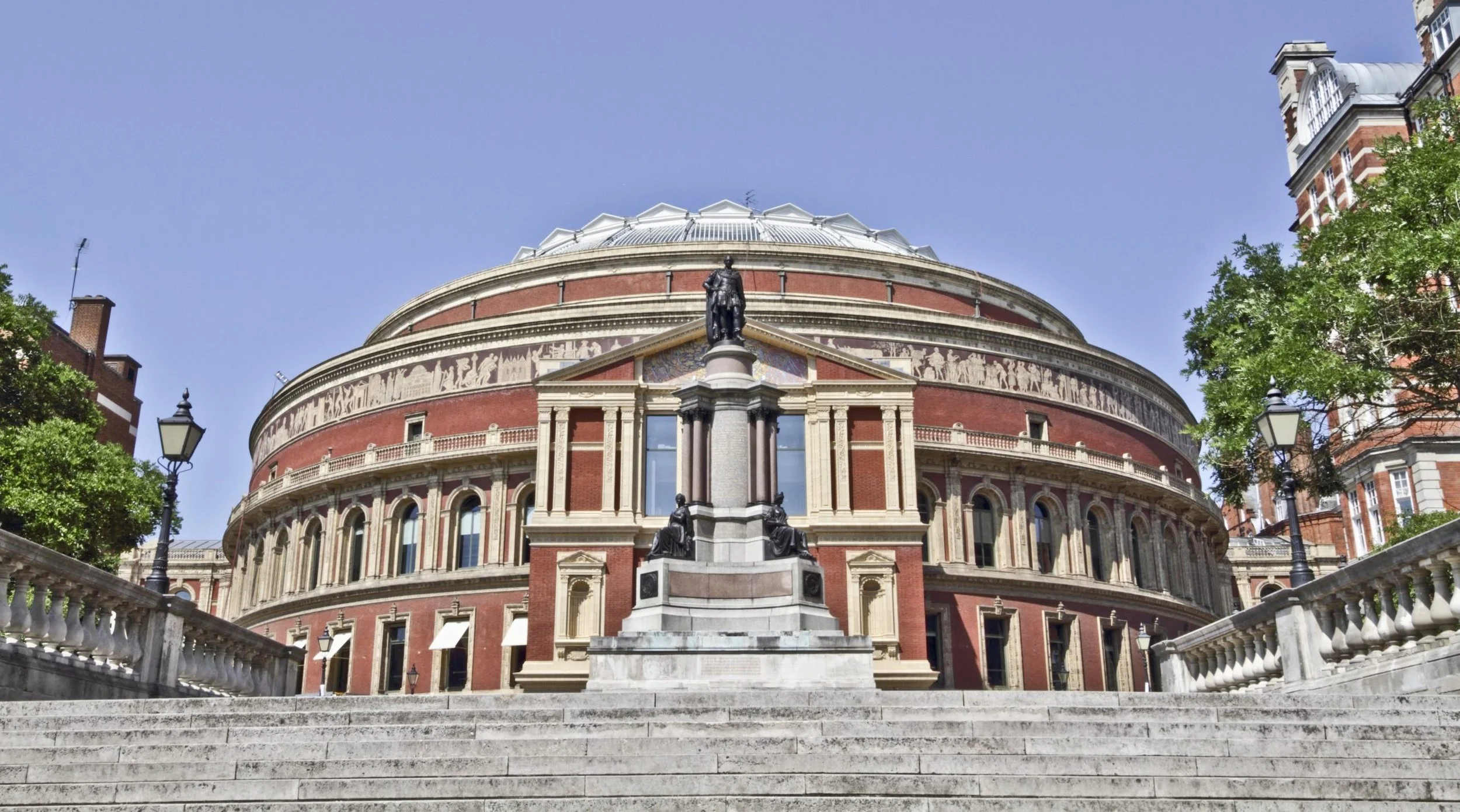
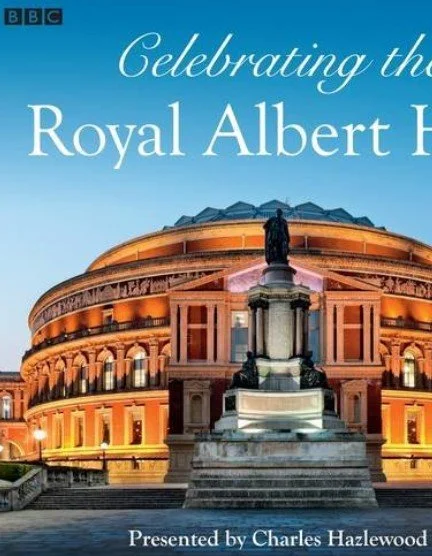
The Royal Albert Hall, designed by Francis Fowke.