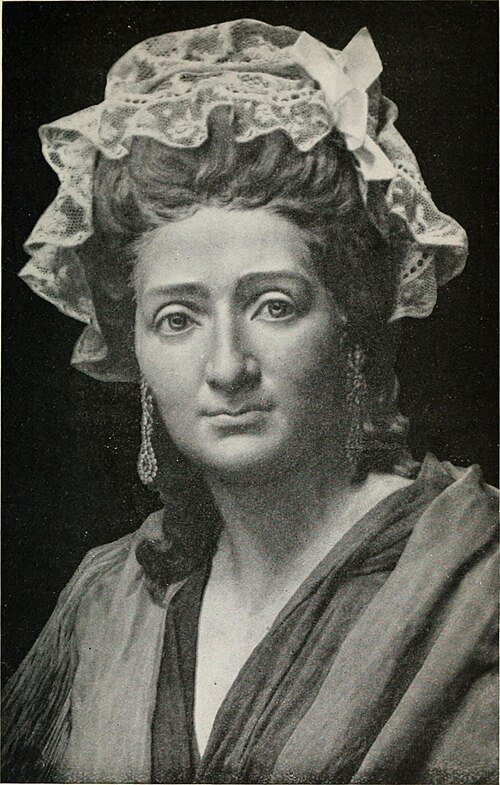
MARIE TUSSAUD: BORN 1761
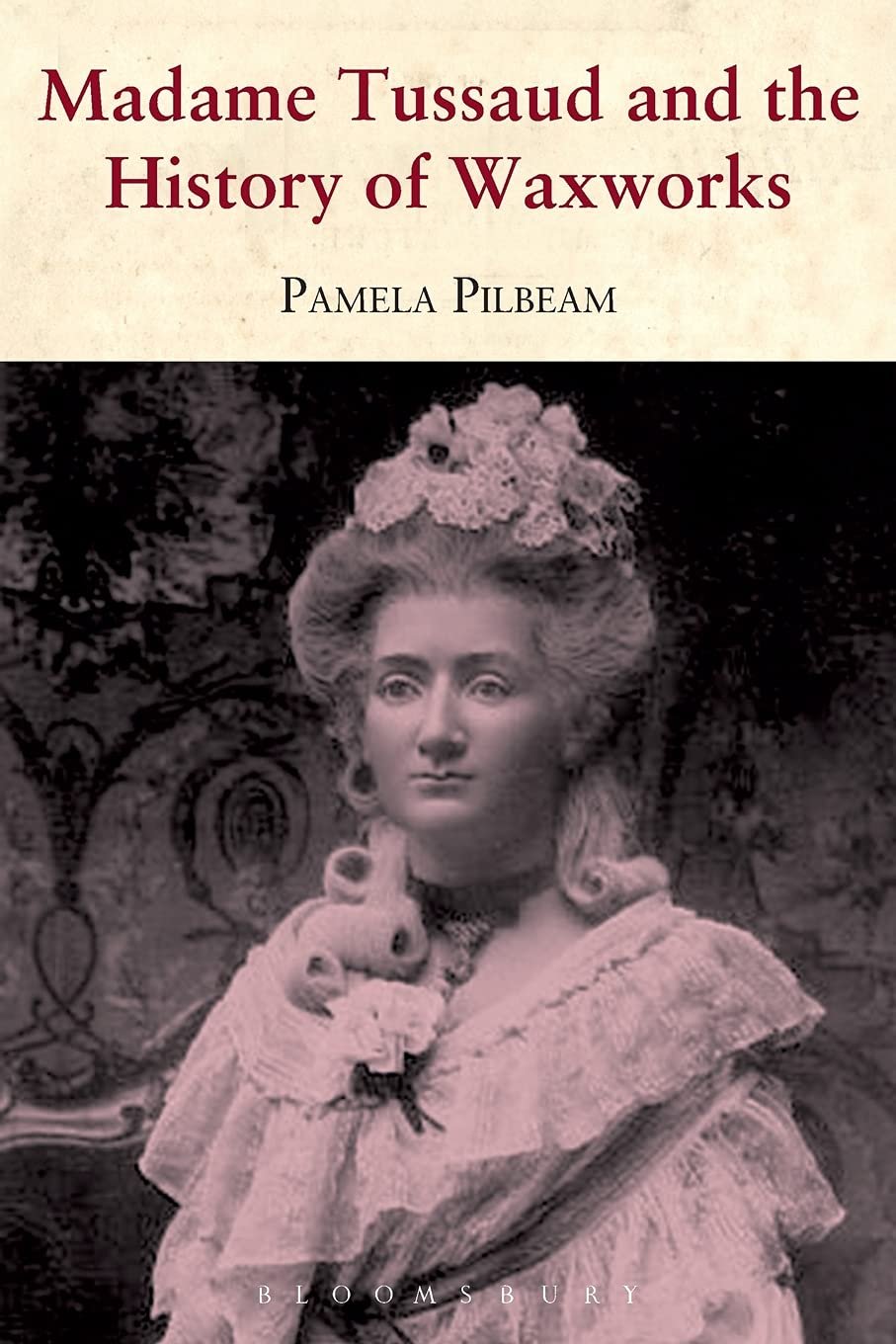
The life of Marie Tussaud, founder of the London waxworks, is stranger than fiction. Marie Tussaud was born as Marie Grosholtz in 1761 in Strasbourg, France. Her mother worked for Philippe Curtius in Bern, Switzerland; he was a physician skilled in wax modelling. Curtius taught Tussaud the art of wax modeling when she was a child; when he moved to Paris, Marie and her mother followed. Marie became art tutor to Madame Elizabeth, the sister of King Louis XVI. During the French Revolution, she was imprisoned for three months, but was subsequently released. During the Revolution, she made models of many prominent victims. Grosholtz inherited Curtius' vast collection of wax models following his death in 1794. For the next 33 years, she travelled around Europe with a touring show from the collection. She married François Tussaud in 1795, took his surname, and renamed her show as Madame Tussaud's. In 1802, she accepted an invitation from lantern and phantasmagoria pioneer Paul Philidor to exhibit her work alongside his show at the Lyceum Theatre, London. This led to the formation of her own permanent exhibition of waxworks. It is still going strong.
BOOKS FROM AMAZON
LIFE
The following is extracted, with acknowledgement and thannks, from the website of Evan Evans Tours at www.evanevanstours.com. It was written in 2023.
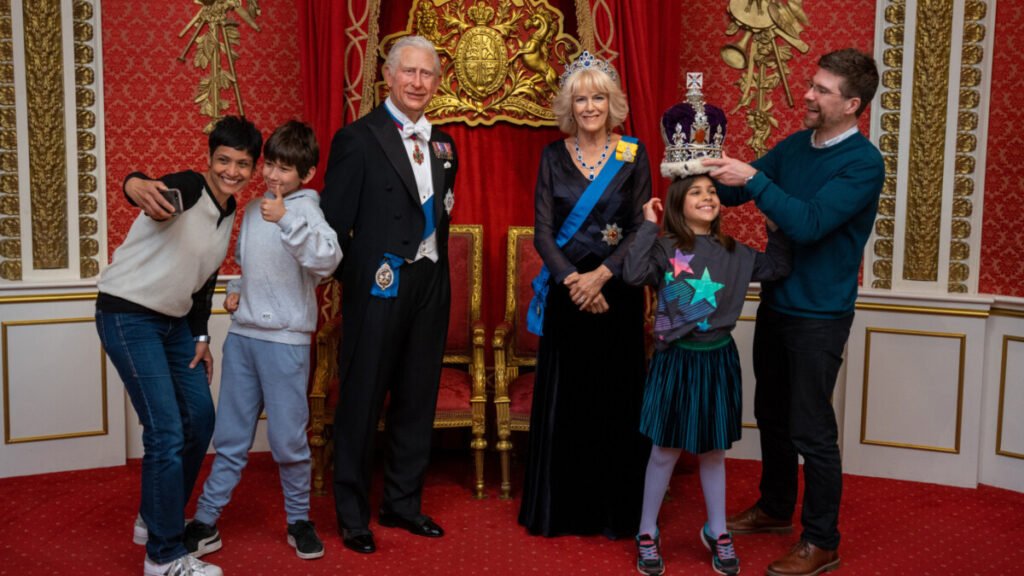
Wax works of King Charles III and Camilla
It’s probably the only place in the world where you can take a picture with His Majesty The King, chat with James Bond, and shake hands with step into Dr Who’s TARDIS in one day. The home of famous fun, Madame Tussauds, is one of London’s leading attractions where you can meet and take selfies with all your favourite celebrities in one building.
Okay, maybe that’s not entirely true. They’re just waxworks. But considering they look so real, you still have a slight chance of convincing your friends and family that the photo of you hugging Ed Sheeran is legitimate.
Nowadays, it’s almost an honour to be invited for a sitting at Madame Tussauds, where you’ll have around 250 measurements taken, then immortalised in wax and added to a room of famous historians, world leaders, celebrities, and criminals.
But that wasn’t always the case. During the French Revolution, aristocrats – whom we could compare to modern-day celebrities – hated the thought of ending up in Madame Tussauds. Why? Well, it often meant they’d have lost their heads in those days!
Marie Grosholtz, born in 1761, better known as Madame Tussaud, was born into a family of public executioners. Her mother, a widow, was the housekeeper of the famous anatomist and wax maker Philippe Curtius. He taught Marie all there was to know about the art of wax sculpture.
It turned out Grosholtz had a natural talent for the craft and was invited to join the Royal Court in Versailles to tutor art to King Louis XVI’s sister, Madame Elizabeth. She sculpted perfect waxworks of many notable figures of the time, including Francois Voltaire and Benjamin Franklin.
Rumour has it that shortly after the onset of the French Revolution, Marie began creating plaster casts and death masks of beheaded victims of public executions, many of whom she knew personally. Some were even her own friends.
Anyway, Marie and her Mother were eventually thrown into prison. The Madame Tussauds website states they were “forced to prove her allegiance to the Revolution by making death masks of executed nobles and the King and Queen.”
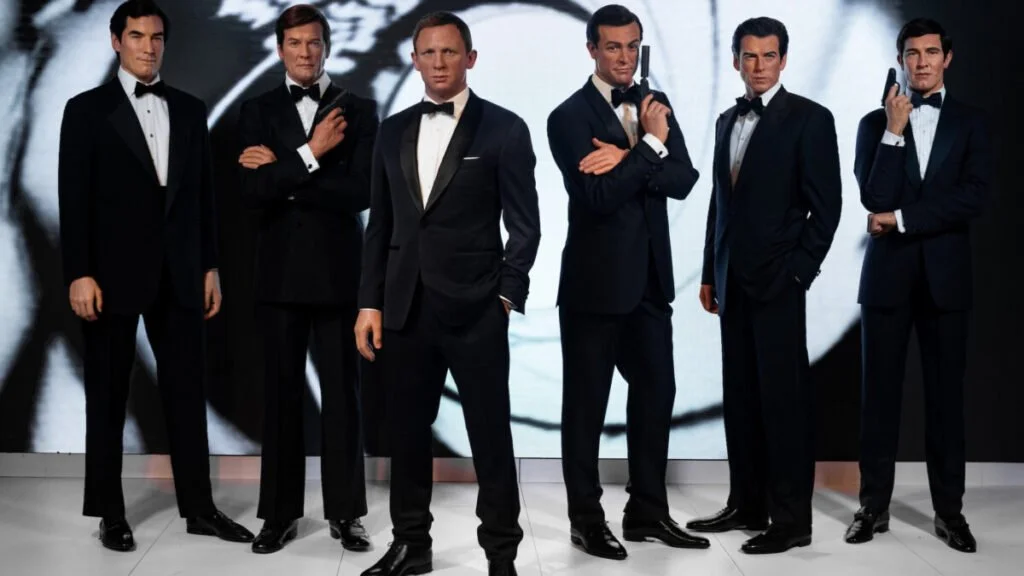
Wax works of James Bond, from Sean Connery to Daniel Craig
And she did just that, crafting moulds out of hundreds of severed heads, including Queen Marie Antoinette and Maximilien Robespierre. These ‘death masks’ were known as revolutionary victories and were paraded through the streets of Paris. In her memoirs, Tussaud said she “sat on the steps of the exhibition, with the bloody heads on her knees, taking the impressions of their features.”
Marie eventually left France and toured across Europe, showcasing her collection of decapitated waxworks. In 1795, she married Francois Tussaud, and her slightly creepy travelling show became, as it’s known today, ‘Madame Tussauds’. When her husband left her, she settled in London and opened a waxworks business. She set up a room showcasing her historical and royal figure waxworks and created the ‘separate room’, home to her eerie death masks.
It was later renamed the ‘Chamber of Horrors’, which still exists today. Unfortunately, the museum was partially destroyed by fire in 1925, and over 300 of Tussaud’s original waxworks were lost.
No wax museum can quite live up to the astonishing story of Marie Tussauds and her creepy creations. However, the Madame Tussauds Museum on Baker Street, London, is now one of the most iconic tourist attractions in the country.
There are 14 zones, combining glitz and glamour with deep history and culture. Home to over 300 wax figures, it’s the perfect place to get a snap with your favourite movie star or singer, give Harry Styles a cuddle and say hello to the King.
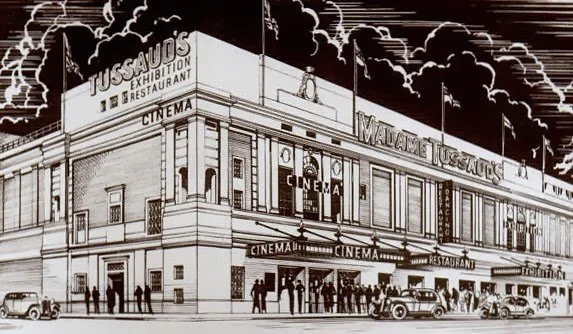
Madame Tussauds, London, before the Second World War.