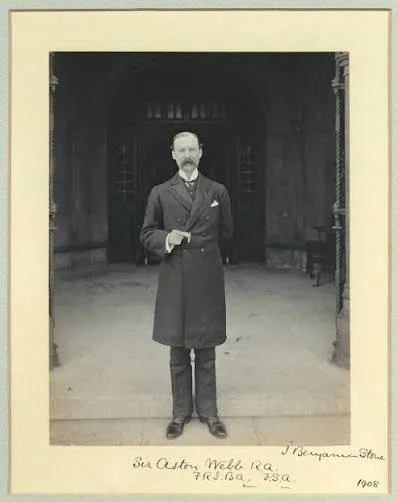
ASTON WEBB: BORN 1849
VICTORIA & ALBERT
Sir Aston Webb, GCVO, CB, RA, FRIBA was a British architect who designed the principal facade of Buckingham Palace and the main building of the Victoria and Albert Museum. He was president of the Royal Academy from 1919 to 1924. He was also the founding chairman of the London Society.
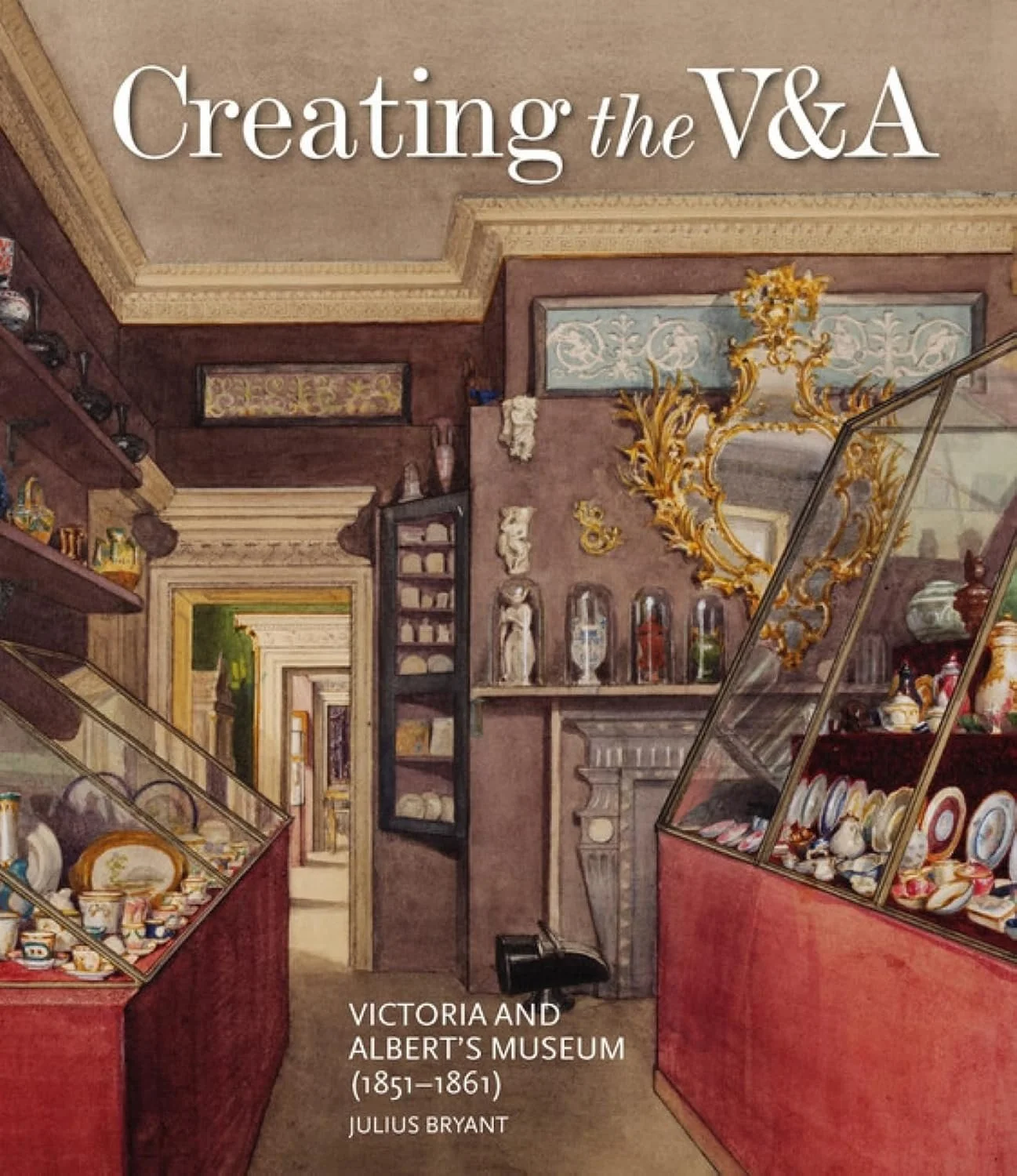
The Victoria and Albert Museum, with its vast and spectacular entrance on the Crowell Road, exemplifies the ambition and scholarship of Britain’s Victorian era.
BOOKS FROM AMAZON
LIFE
The following article on Aston Webb is reproduced, with acknowledgement and thanks, from the architecture.arthistoryresearch.net website.
Sir Aston Webb was born in Clapham, Surrey, England on 22 May 1849 and was the son of Edward Webb (1805-1854), a painter. He trained as an architect with Robert Richardson Banks (1812?-1872) and Charles Barry junior (1823-1900) from 1866 to 1871 He also attended classes at the Architectural Association in London. In 1871-72 he travelled on the Continent. In 1873 he was a Pugin Student. He commenced independent practice in London in 1874.
Over a period of twenty-five years he frequently collaborated on projects with Edward Ingress Bell (1837–1914) although they were never in partnership. Towards the end of his career he was also in partnership with his son, Maurice Everett Webb, (1880-1939) as Sir Aston Webb & Son [also known as. Webb & Webb, and as Sir Aston Webb & Maurice E. Webb]
Webb was elected an Associate of the Royal Institute of British Architects (ARIBA) in 1874 and a Fellow of the Royal Institute of British Architects (FRIBA) in 1883. He was also elected an Associate of the Royal Academy (ARA) in 1884 and a Royal Academician (RA) in 1903. He was President of the Architectural Association in 1881-82, President of the Royal Institute of British Architects from 1902 to 1904, and President the Royal Academy from 1919 to 1924. He was awarded the RIBA Royal Gold Medal in 1905, and the Inaugural Gold Medal of the American Institute of Architects in 1907 and was knighted in 1904.
Webb died at his home in Worthing, Sussex on 21 August 1930.
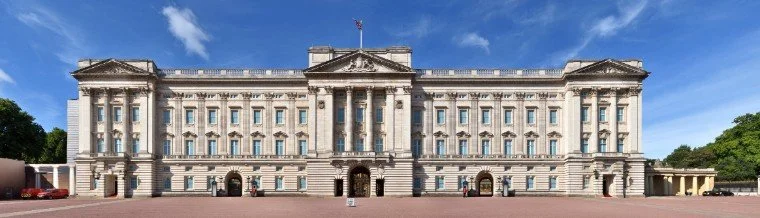
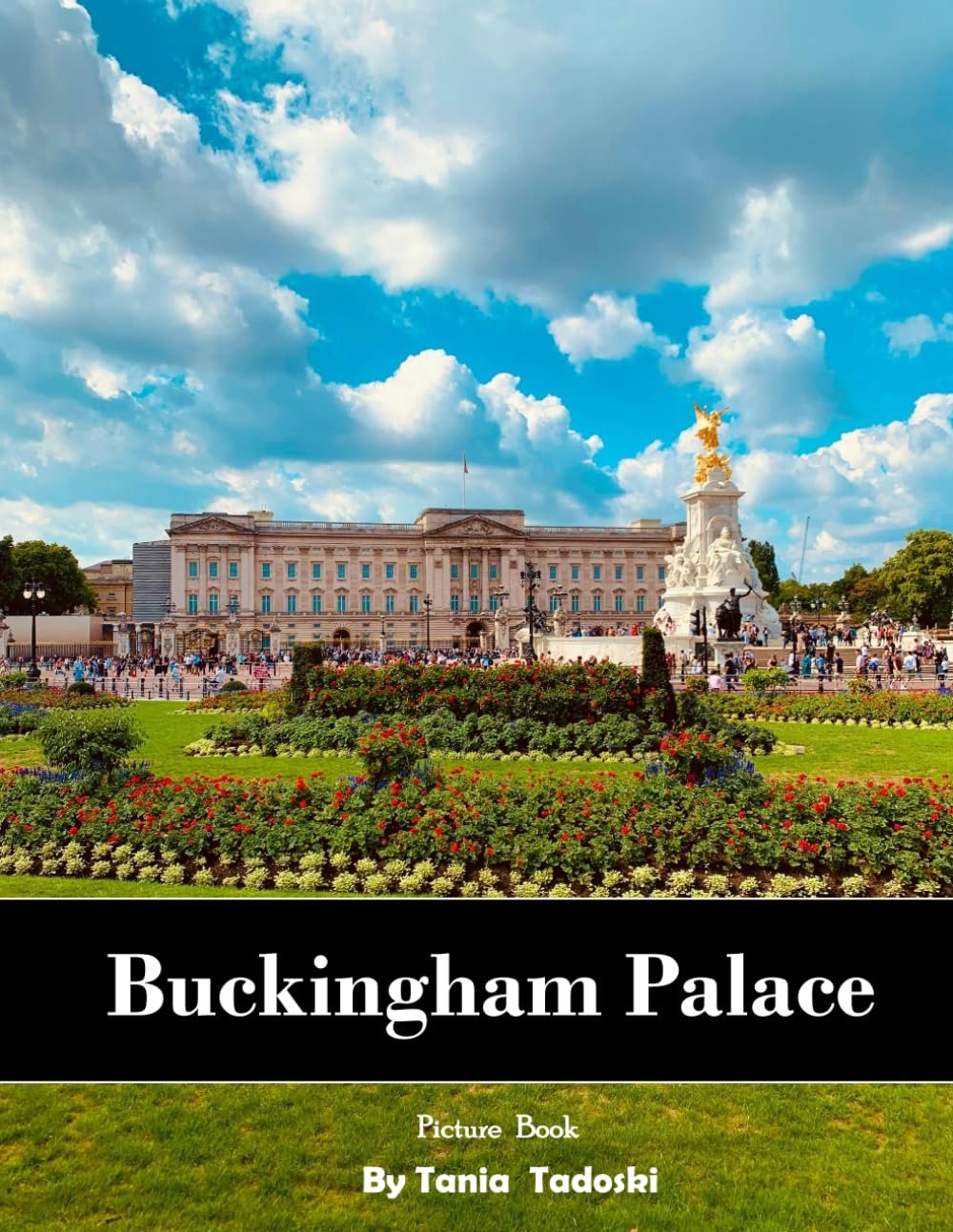
Buckingham Palace.
Webb is principally known for the façade he designed for the Royal residence, Buckingham Palace in London (1913). Other notable architectural projects by him included Victoria Law Courts, Corporation Street, Birmingham (1887-91); Restoration and additions, St. Bartholomew-the-Great, Smithfield, City of London (c.1890-97); the main building at the Victoria & Albert Museum in London (1891-1909); French Protestant Church, 9 Soho Square, London (1893); Royal United Services Institute, Whitehall, Westminster, London (1893–95); Christ's Hospital school in Horsham, Sussex (1893–1902); St. Alban's Church, Margravine Road, Fulham, London ((1894-96); Mumford's Flower Mills, Greenwich High Road, Greenwich, London (1897); Britannia Royal Naval College, Dartmouth, Devon (1899-1905); Royal College of Science in South Kensington, London (1900–06); Imperial College of Science and Technology, Imperial Institute Road, Kensington, London (1900-06); the planning and design of many of the buildings for the University of Birmingham (1900-12); Lay-out of The Mall and rond-point in Front of Buckingham Palace, London; Thames Warehouse, Stamford Street, Southwark, London (1901); St. Michael's Court, Gonville and Caius College, Cambridge (1903); King's College, Cambridge (1908); Admiralty Arch, Westminster, London (1908–09); and Royal School of Mines in South Kensington, London (1909–13).
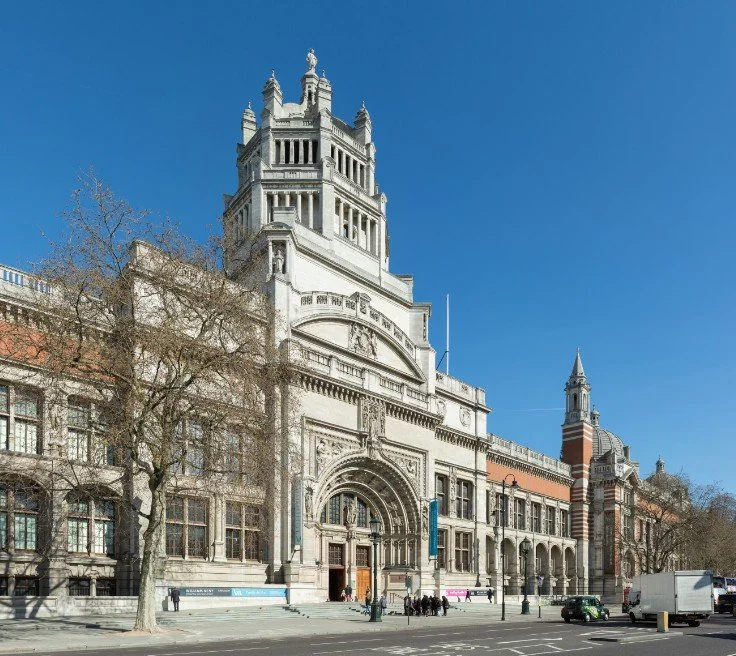
Victoria & Albert Museum.
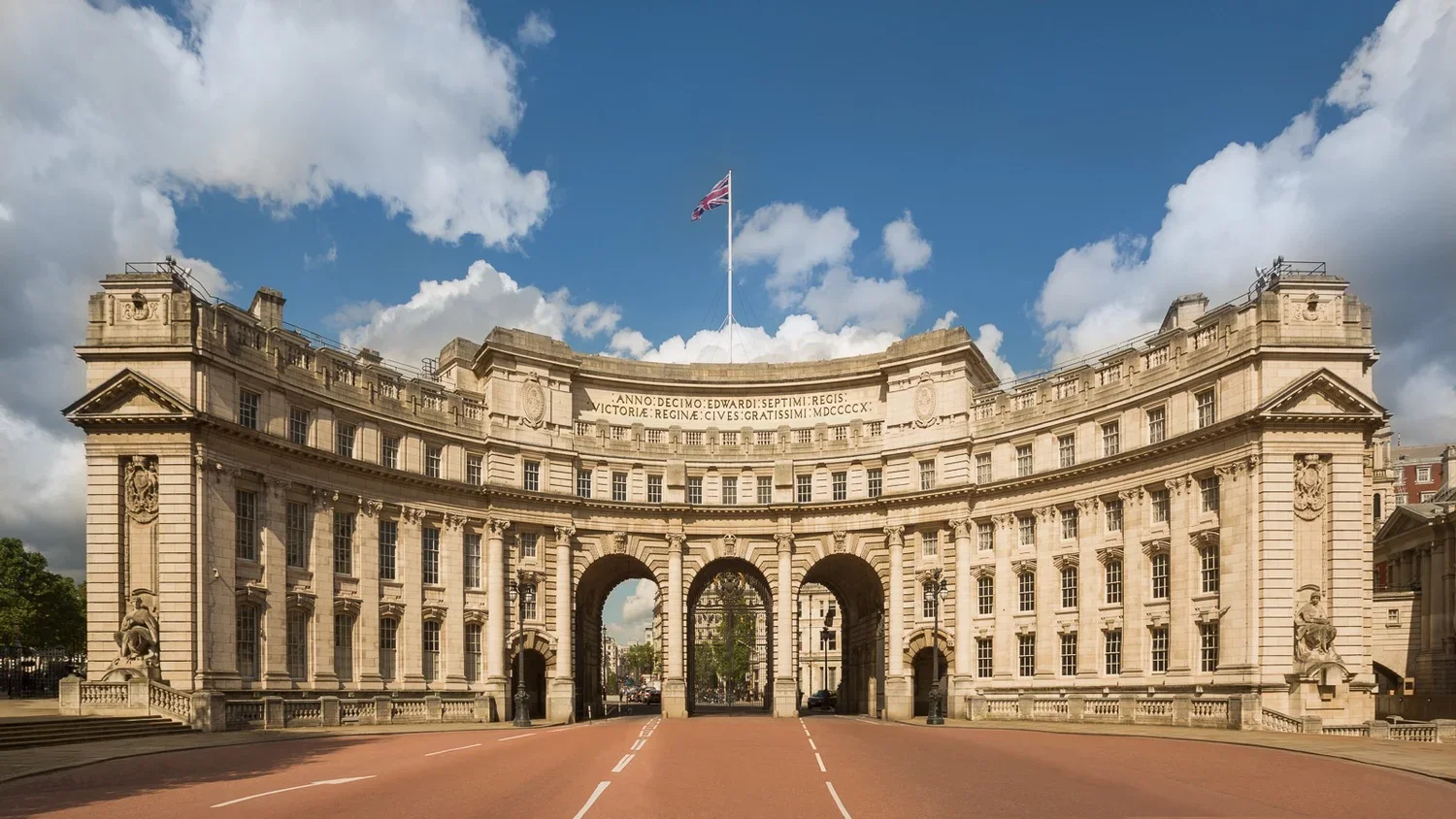
Admiralty Arch; the entrance to the Mall.