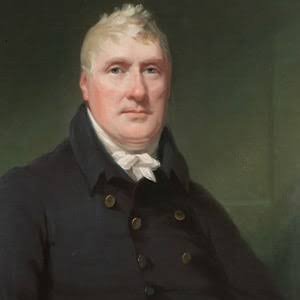
JOHN RENNIE: BORN 1761
DOCKS & BRIDGES
John Rennie was the ninth child of a Scottish tenant farmer. He worked in his teens for Andrew Meikle, a local millwright and inventor of the threshing machine. He made his way to Edinburgh University, where he was the first student to study engineering. He then moved to London, and beame the leading civil engineer of his day. His works included the early London docks and several Thames bridges. He was intensely hard working, and remarkably tall (6ft 4in).
BOOKS FROM AMAZON

LIFE
The following was reproduced, with acknowledgement and thanks, from the website of the Instituion of Civil Engineers at www.ice.org.uk.
Career
In 1779, Rennie set up in business on his own as a millwright in Scotland. On a recommendation from his university professor John Robison to his close friend James Watt, in 1784, Rennie began to work for engineering and manufacturing firm, Boulton & Watt, in Birmingham.
Rennie eventually moved to London to improve the design of and supervise the engines for Boulton & Watt’s project at the Albion Flour Mills in London. While working in London, it was agreed that Rennie could undertake work for other clients. At first, his commissions came from flour mills, breweries and distilleries, and later sugar mills for the West Indies.
Rennie had moved to London armed with several letters of introduction, including one to John Smeaton, often regarded as the ‘father of civil engineering’. Smeaton invited Rennie to join the Society of Engineers, later the Smeatonian Society and a forerunner of ICE.
Rennie was commissioned to make a survey of the Basingstoke Canal for William Jessop, which subsequently led on to his involvement in the Ipswich & Stowmarket Navigation.
In the 1790s, Rennie began working on the Kennet and Avon Canal in Wiltshire. Rennie was responsible for designing and project managing several more canals, including the Lancaster Canal and the Crinian Canal in Scotland.
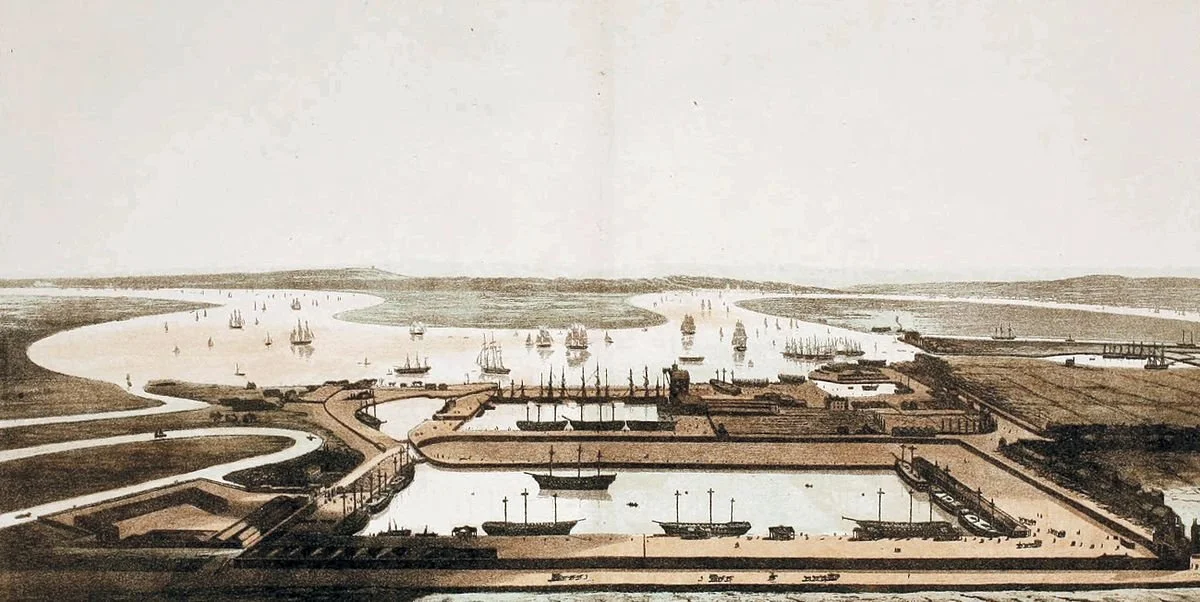
East India Docks 1806, looking south, import dock in foreground and export dock adjacent to the river. From “Chronicles of Blackwall Yard” by Robert Wigram and Henry Green (1881)
In 1800, he was appointed engineer to the London docks and in 1803, engineer to the East India Docks. For the royal dockyards, Rennie was very involved in introducing steam-driven machinery to speed up the repair of ships.
He moved on to become involved in designing road bridges, becoming famous for his bridges over the Thames - Waterloo Bridge, Southwark Bridge and London Bridge as well as others across the country, including Kelso, Scotland.
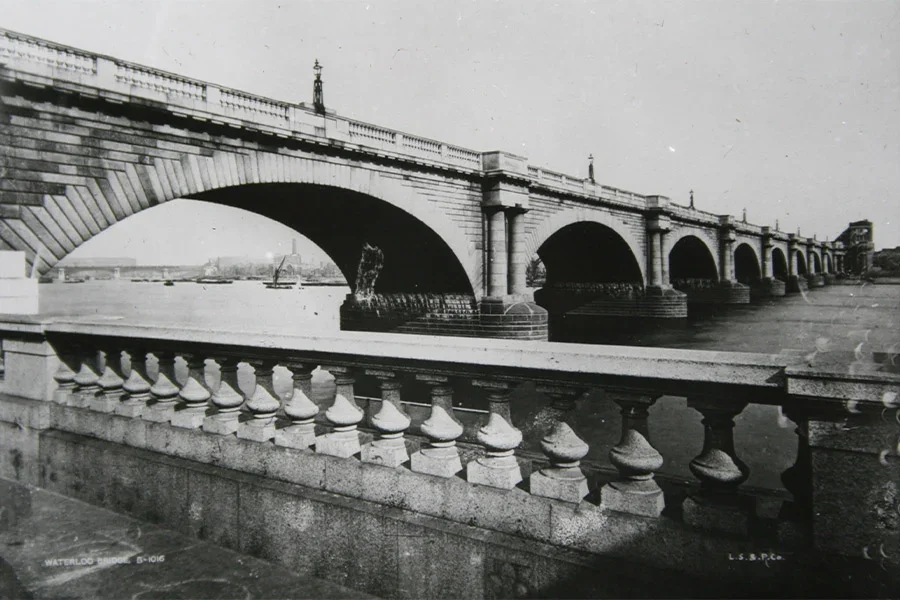
Waterloo Bridge
Personal life
Rennie was born on 7 June 1761, near East Linton, 20 miles east of Edinburgh, the ninth child of a tenant farmer. In 1790, Rennie he married Martha Ann Mackintosh (d.1806), daughter of E. Mackintosh. They had seven children.
John Rennie 'the elder' was an imposing figure, 6ft 4in tall, and 15 stone, but suffered badly from rheumatism. By contemporary accounts, Rennie lived to work, and had few other interests. His biographer, Samuel Smiles said: “Work was with him not only a pleasure – it was almost a passion.”
Rennie was a book collector. He would commission any friends visiting Paris to purchase rare texts for his collection. The only holiday that it is known Rennie took was with James Watt to France in 1816, the year after the Battle of Waterloo. They spent much time inspecting the dock and harbour works commissioned by Napoleon.
Rennie died, after a short illness, at his house in Stamford Street, London, on 4 October 1821, and was buried in the crypt at St. Paul's Cathedral.
Two of his sons, George and John, became notable engineers, George as a mechanical engineer, John as a civil engineer. Both sons were responsible for completing several of their father’s projects after his death. His son, Sir John Rennie became the third president of the ICE in 1845.
Education
While still at the local parish school, Rennie loved to visit Andrew Meikle, the local millwright and inventor of the threshing machine. He began to work for him when he was 12, for two years while continuing his education. After a further two years of education at Dunbar High School, Rennie returned to work for Meikle.
Rennie studied at Edinburgh University from 1780 – 1783. He was the first professional engineer to have a university education. He was elected Fellow of the Royal Society in 1798
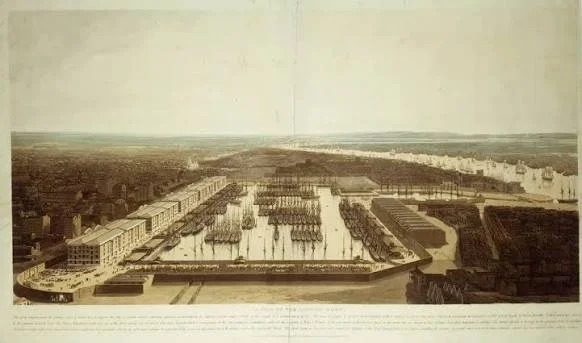
The London Dock. Built in Wapping in 1805, the London Dock, which includes Tobacco Dock, was once the landing point for luxury goods like wine, tobacco, spices and tea.