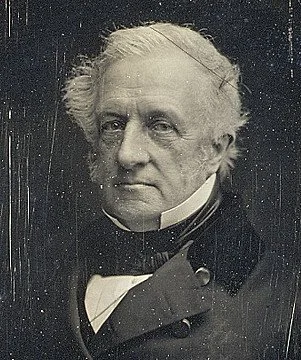
GEORGE PEABODY: BORN 1795
BUILDING HOUSING
Text George Peabody was an American financier and philanthropist. He is often considered the father of modern philanthropy. Born into a poor family in Massachusetts, Peabody went into business in dry goods and later into banking. In 1837 he moved to London (which was then the capital of world finance) where he became the most noted American banker. He established the Peabody Trust which built, and still owns, public housing across London.
BOOKS FROM AMAZON

LIFE
The following was extracted, with acknowledgement and thanks, from the website of the London Archives at www.thelondonarchives.org.
The Peabody Trust has its origins in gifts totalling £500,000 made by the American Citizen, George Peabody, for the benefit of the people of London, the city where he spent much of his adult life. The gift, which became known as the Peabody Donation Fund, was put into the hands of selected trustees who were to ensure that it should be used to 'ameliorate the condition of the poor' of London. No other stipulations were made, but it was agreed that the provision of cheap, clean housing would best fulfil the intention of the gift. Peabody has been thought of as being the 'founder of modern philanthropy'.
The first housing estate was opened at Spitalfields in 1864 and consisted of 57 dwellings and nine shops. The Peabody estates became an established feature of London's life and built landscape. The Trust acquired the 1830 Housing Society (The Society for the Improvement of the Labouring Classes) in 1965 and The Westminster Housing Trust Limited in 1972.
Who was George Peabody?
George Peabody (1795-1869) made his money as a dry goods merchant in Baltimore. He moved to London in 1837, the year Queen Victoria came to the throne, where he became involved in merchant banking and established the firm George Peabody and Company.
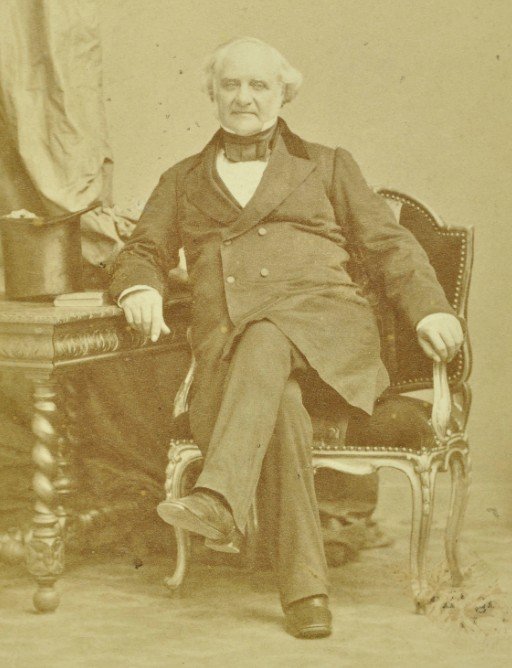
Portrait photograph of George Peabody
Reformers had been agitating for better housing in the large cities of England for thirty years. The Industrial Revolution and the coming of the railways had attracted people to London and greatly increased the population of the capital. Besides, the construction of the railways had made it necessary to demolish large sections of working-class housing.
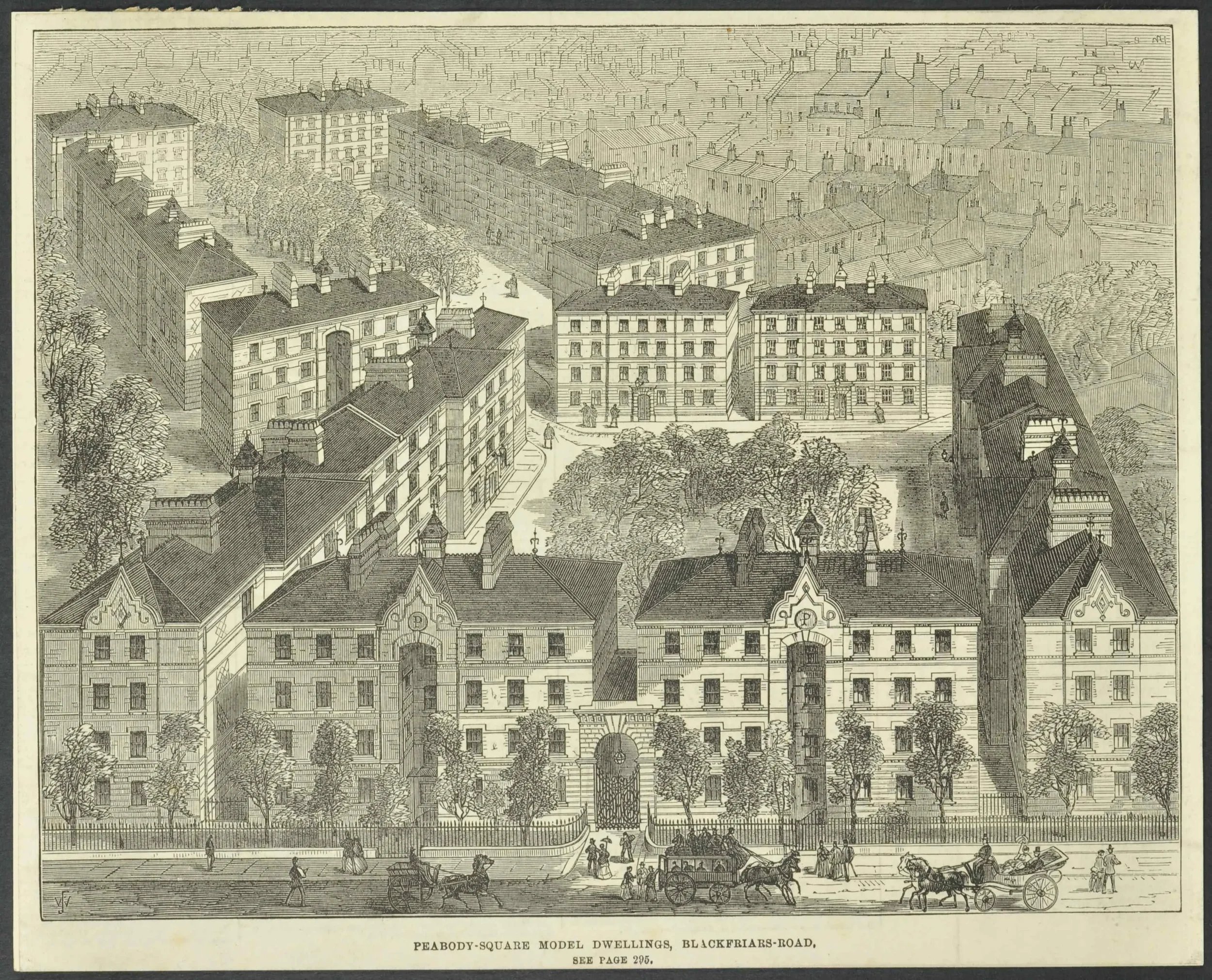
Blackfriars Road, Peabody Square, Southwark
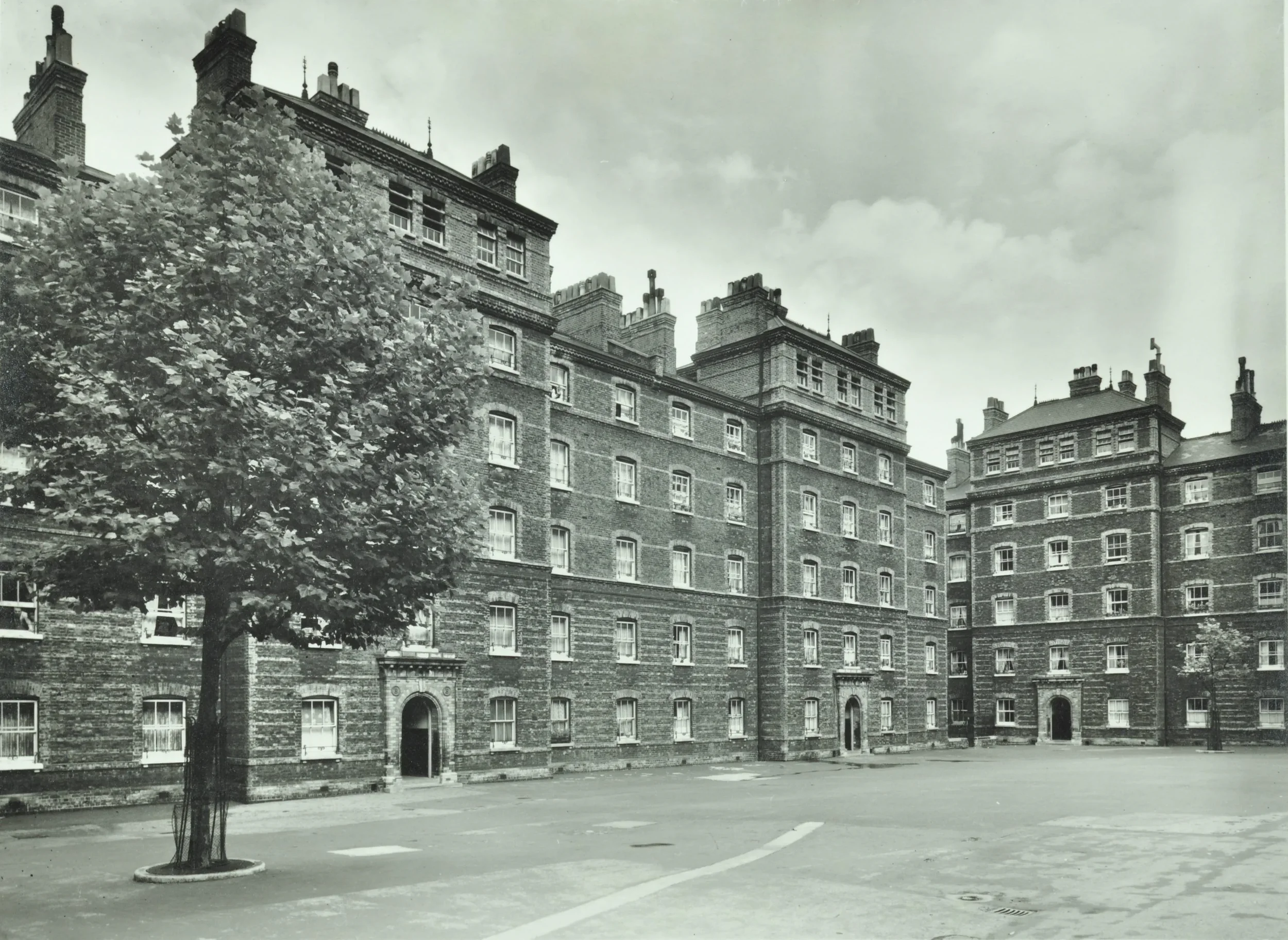
Herbrand Street, Holborn.
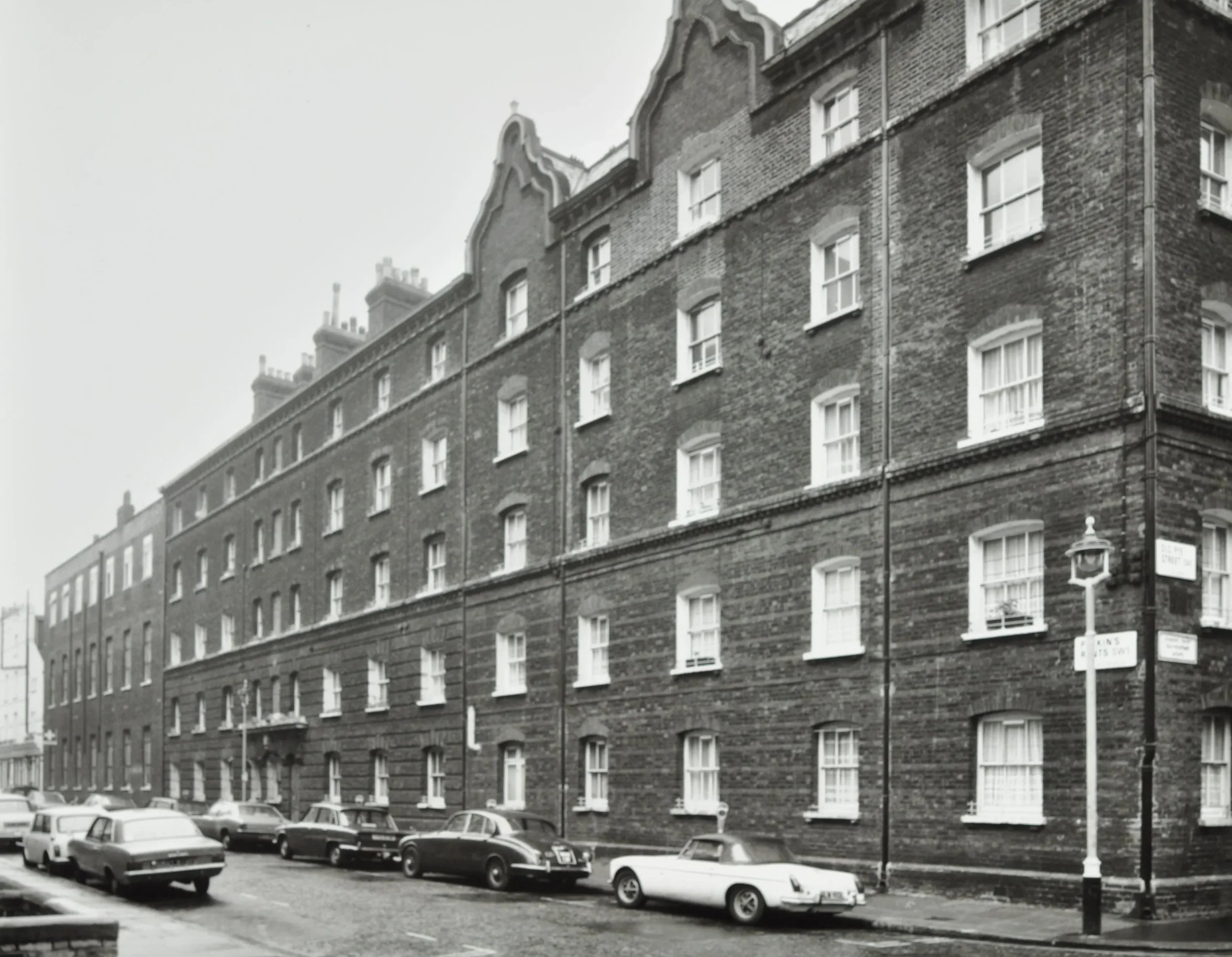
Old Pye Street, Westminster.